From Books to Bits
How can academic literacy survive in the era of AI summaries and fragmented attention? What does meaningful reading look like to today's students? In this new blog series, we'll meet experts who are tackling this emerging challenge – sometimes with unconventional solutions.
Technological breakthroughs mean that content can now be delivered in multiple formats and through many channels. As a result, there have been radical changes to how primary and secondary education is delivered, with some fortunate consequences – teaching resources are more flexible and appealing than they have ever been – and some unintended ones: many students now say that they struggle to work through all the recommended reading on lecturer-supplied resources lists and many are not accustomed to reading full-length books. The student profile has also changed: students today are pulled in multiple directions while they attend university, some of them working full-time, others dealing with family responsibilities.
This blog post and the ones that follow it will explore new attitudes to learning from academics and information specialists who are responding to the skills and needs of modern students.
Marjorie Levine-Clark is Professor of History and Associate Dean in the College of Liberal Arts and Sciences at the University of Colorado Denver (CU Denver), United States. As well as consenting to be interviewed for this blog post, she kindly supplied us with a presentation she delivered at the Fiesole Retreat in April 2026. The following article is based on her work. We are also indebted to her for the excellent title for this piece.
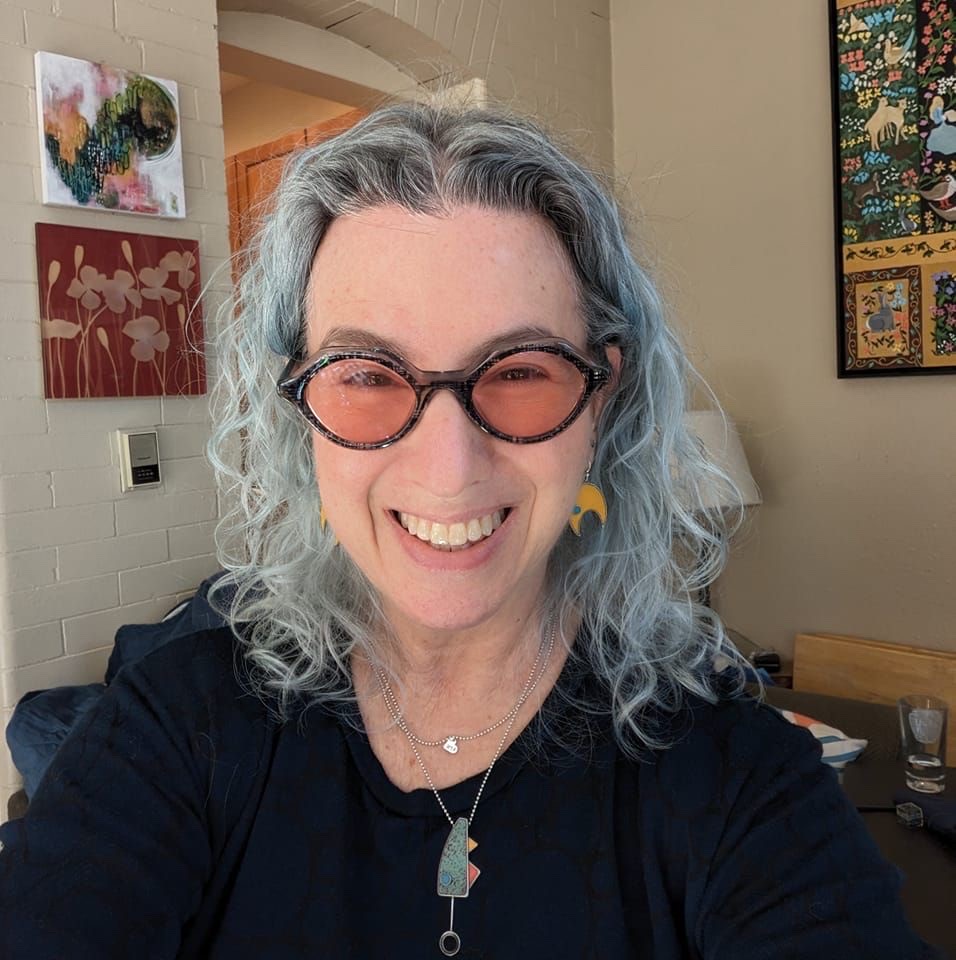
Meeting Students Where They Are
The University of Colorado Denver has 14,000 students, of whom only 48 are history majors. Humanities disciplines now constitute roughly 25% of the College of Liberal Arts and Sciences. 70% of the student body are undergraduates; 30% are graduates/professionals; 74% are full-time students; 82% are from Colorado; and 43% are male, 56% female. This profile is similar to that of many of the middle-sized post-1992 universities in the United Kingdom. At CU Denver, 64% of students work while enrolled and 40% work full-time. Professor Levine-Clark says that it is understandable that they prioritize personal economic necessity and family demands over reading.
“AI tools allow students to engage with any text’s surface meaning without reading a word.”
Research shows that between 20% and 30% of college students in the United States complete required reading assignments and many are daunted by the prospect of reading several books over the course of a semester. Because of standardized testing preparation in secondary schools, many university students are more familiar with excerpts than whole books, and their frequent use of social media has shortened their attention spans. Some students arrive at college unable to read 20 pages with critical attention. Professor Levine-Clark emphasizes that they are “not lazy: they have been prepared in different learning environments.” Faculty expectations have been responding to these changes: professors are cutting student workloads by as much as half, but still some students fail to complete the work.

The fact that students have not learnt to read at length during their primary and secondary education is now exacerbated by their reliance on artificial intelligence. AI tools allow students to engage with any text’s surface meaning without reading a word. Chatbots can answer comprehension questions in seconds, meaning that building the case for careful reading becomes harder to make – especially for students pressed for time. If students interact with AI-generated summaries, the use of reading to develop the critical thinking skills and empathy central to the study of the humanities is lost.
Professor Levine-Clark therefore came to the conclusion that she must “meet students where they are, not where I wish they were.” She would no longer assume that they came to her courses with the requisite reading skills, and instead give instruction on these in class. She would encourage them to read shorter materials in depth, rather than assigning longer texts she assumed students would read in a more shallow way, or not at all. She also decided to structure assignments so that AI could be used critically, rather than at random – since “AI is now part of the student experience” and it would be unrealistic to try to banish its use.
These are the course reading goals for Professor Levine-Clark’s class in Victorian literature:
By fully participating in this course, you will be able to:
Read Victorian sources with confidence and curiosity, interpreting a wide range of materials – novels, government documents, images, journalism, maps – and thinking about what they can and can’t tell us about the past.
Recognize how historians build arguments, reading secondary sources to get practice identifying historians’ main claims, evidence, and interpretive choices, and how these shape the stories we tell about the nineteenth century.
Use historical evidence to make your own argument about something you care about, developing your own historical question, gathering relevant sources, and crafting an argument that connects the Victorian past to an issue that matters to you today.
She more or less quartered the amount of reading students were expected to do, from up to 100 pages twice a week to 50 to 60 pages per week in total. She introduced them to three types of reading: descriptive context, short primary sources and secondary-source articles or excerpts. She didn’t entirely discard long-form reading: she assigned one sustained novel spread across four weeks in addition to the weekly readings – the example she chose in her presentation was Elizabeth Gaskell’s North and South. Students knew to expect more heavy reading over this period before returning to the 50-to-60-page norm. This set a workload that students could reasonably cope with – though some still said they found it tough. Each class began by requiring students to write a synthesis paragraph by hand, connecting that week’s readings before the discussion opened.
The final assignment given to the students was to answer the question, “How does Victorian history illuminate an issue you are passionate about today?” This was to show them that history is not abstract, but instrumental to something they care about; required them to use the content they had studied; and prepared them, via the weekly synthesis paragraphs, to think deeply.
“In the past, designing a course based on some ideal reader, many students were set up to fail. I would rather sacrifice that ideal reader and develop more inclusive teaching practices.”
Professor Levine-Clark said that making the radical changes to this course took a great deal of time and effort on her part; however, the work has been worth it. She has observed that students now arrive at class having done the reading; that in-class writing raises the quality of the discussion; and that spreading the study of the novel over four weeks enabled students to engage with it fully – they now refer to it when studying other works. However, she does not deny that some pedagogical loss is part of the trade-off: using the new approach, less historical content can be covered, and academics like herself are forfeiting the expectation that students will attempt truly independent ‘long reading.’
I asked her if she felt sad about the way that approaches to teaching and learning are changing, and whether she hankers after the traditional ways of doing things. This was her reply: “In some ways, yes. But I see my job as helping students to succeed; in the past, designing a course based on some ideal reader, many students were set up to fail. I would rather sacrifice that ideal reader and develop more inclusive teaching practices.”
Our webinar, Libraries as Engines of Education, which took place on Thursday 21st May, explored this topic further. The speakers were Jenny McGarvey, Digital Lead in the Skills Study Team at the University of Exeter, and Jane Hammons, Head of Teaching and Learning at the Library of Ohio State University.
You are currently viewing a placeholder content from YouTube. To access the actual content, click the button below. Please note that doing so will share data with third-party providers.
[Title Image: Photoboyko/iStock/Getty Images]