Who Was Émilie du Châtelet? An Interview with Andrea Brill
Émilie du Châtelet helped reshape Enlightenment science and challenged gendered exclusion. As we celebrate Women’s History Month, we explore du Châtelet’s thought, legacy and archival traces in conversation with author Andrea Brill.
Gabrielle Émilie Le Tonnelier de Breteuil, marquise du Châtelet (1706–1749) belongs to a long list of brilliant women whose work was forgotten by history. Set firmly in the intellectual context of the early Enlightenment, Émilie du Châtelet’s life and works combined public intellectual labor and the burdens of aristocratic and domestic responsibility.
For sixteen years, she shared an intellectual and personal partnership with a certain Voltaire at the Château de Cirey in north-eastern France. Their household was a salon, a laboratory and a constant managerial effort. Du Châtelet ran the estate’s affairs, navigating social hostility and enduring the grief of war and separation while undertaking a rigorous program of research and writing.
Scientifically, her achievements in physics, philosophy and mathematics were widely read and respected by early Enlightenment intellectuals. Du Châtelet engaged Cartesian, Newtonian and Leibnizian thought with a fresh perspective, bringing new life to fundamental questions about the nature of God, the universe, and physical reality.
Given these contributions to science and society, why then was Émilie du Châtelet so quickly forgotten by history? How can we get closer to her experiences navigating a patriarchal scientific world, and what can we learn from her example today? In addressing such questions, we are lucky that archives and the documents inside them do not forget so easily, especially when brilliant researchers are listening carefully to the stories they tell.
We spoke to Andrea Brill, a specialist author and graduate of LMU Munich, whose work ranges widely across publishing, public relations and journalism. Her new book is Émilie du Châtelet: Mathematikerin, Naturphilosophin und Gefährtin Voltaires (Böhlau Verlag, 2025).
Alexandra Hinz: What do you find particularly fascinating about Émilie du Châtelet? When did you first come across her?
Andrea Brill: I first recognized Émilie du Châtelet as a student in the 1990s, when I read Jean Orieux’s biography of Voltaire. She remained in my memory as an exceptional woman with deep scientific knowledge, extraordinary self-perception, and a special desire for freedom when compared with other women of her social class in this period. I was fascinated by her strong will to work and to gain a position in the scientific community of her times, to which only men were usually admitted.
Her correspondence shows that she was highly regarded by fellow scientists like Pierre-Louis Maupertuis, Johann II Bernoulli and Leonhard Euler. They accepted her eye-to-eye, as a colleague. The clarity of du Châtelet’s thinking across a variety of different topics was an impressive feat in her time – with works ranging from Discours sur le bonheur and Institutions de physique, to her comprehensive critical commentary of the Bible – and remains no less impressive from our modern standpoint.
AH: How did you approach your research? Were there any findings that surprised you or perhaps even changed your perception of Émilie?
AB: I started my research by reading the most recent and important biographies of Émilie du Châtelet, such as Judith Zinsser’s biography, which was published in 2009. I then moved on to the correspondence, edited by Theodore Besterman, as well as the valuable, well-commentated recent edition by Ulla Kölving and Andrew Brown.
“She remained in my memory as an exceptional woman with deep scientific knowledge, extraordinary self-perception, and a special desire for freedom.”
The correspondence of Voltaire was very interesting. His letters with Émilie were lost, but the letters of Voltaire to his friends, full of references to Émilie’s ideas and works, demonstrate the wonderful relationship they had. Also very useful were the works of Ruth Hagengruber and other authors concerning the intellectual works of du Châtelet.
I paid several visits to the departmental archives in Haute Marne, France, where the inheritance of the du Châtelet family is located. There I found many interesting sources, for example concerning daily life in Château de Cirey, where Voltaire and Émilie spent sixteen years together. These sources illustrate another side of Emilie du Châtelet: Besides her scientific work, she was also responsible for the administration of the domain.
AH: Émilie du Châtelet was famous in her time but fell increasingly into obscurity after her death. What were the reasons for this, and what role did social developments play?
AB: I think it is a matter of historical time. Women in science were highly exceptional in the 18th century. Even after her death, there was little interest in women working as scientists or artists. Hence Émilie du Châtelet’s reputation disappeared in the years that followed, because there was just no awareness of the efforts and achievements of women.
“It is her independence of thought. In the confrontation between Cartesians and Newtonians, for example, she didn’t pick one side of the debate. She was neutral and appreciated each way of thinking.”
Today there is greater awareness of women and their work – women as scientists, artists or writers. So, I would suggest, we can be thankful for scholarly interest in matters and questions of women’s history, that women are nowadays more of a focal point in the public sphere, including readers, journalists and biographers. As researchers, we are glad that interest is growing and that wonderful women like Émilie du Châtelet are being recognized more and more.
Click here to learn more about Naturlehre, the new German edition of Châtelet’s Institutions de Physique, edited by Ruth Edith Hagengruber and published by De Gruyter.
AH: If time travel were possible: what three questions would you most like to ask Émilie du Châtelet in person?
AB: Dear Émilie, it is so fascinating, how successfully you got your place in a scientific community, which was dominated by men. What consequences have resulted from this success? What kind of resistance did you experience and how did you handle these challenges?
On the other hand, your personal way of living must have been a provocation for many of your female friends, members of the aristocratic society, or members of your family. How did you feel about these possible hostilities and how did you respond to them?
The time in which you lived was a time of cruel wars. Your husband, the Marquis du Châtelet, spent many years at the front of conflict. How did you cope with being distanced from men who were very close to you? How did you cope with the threat of war and manage these feelings?
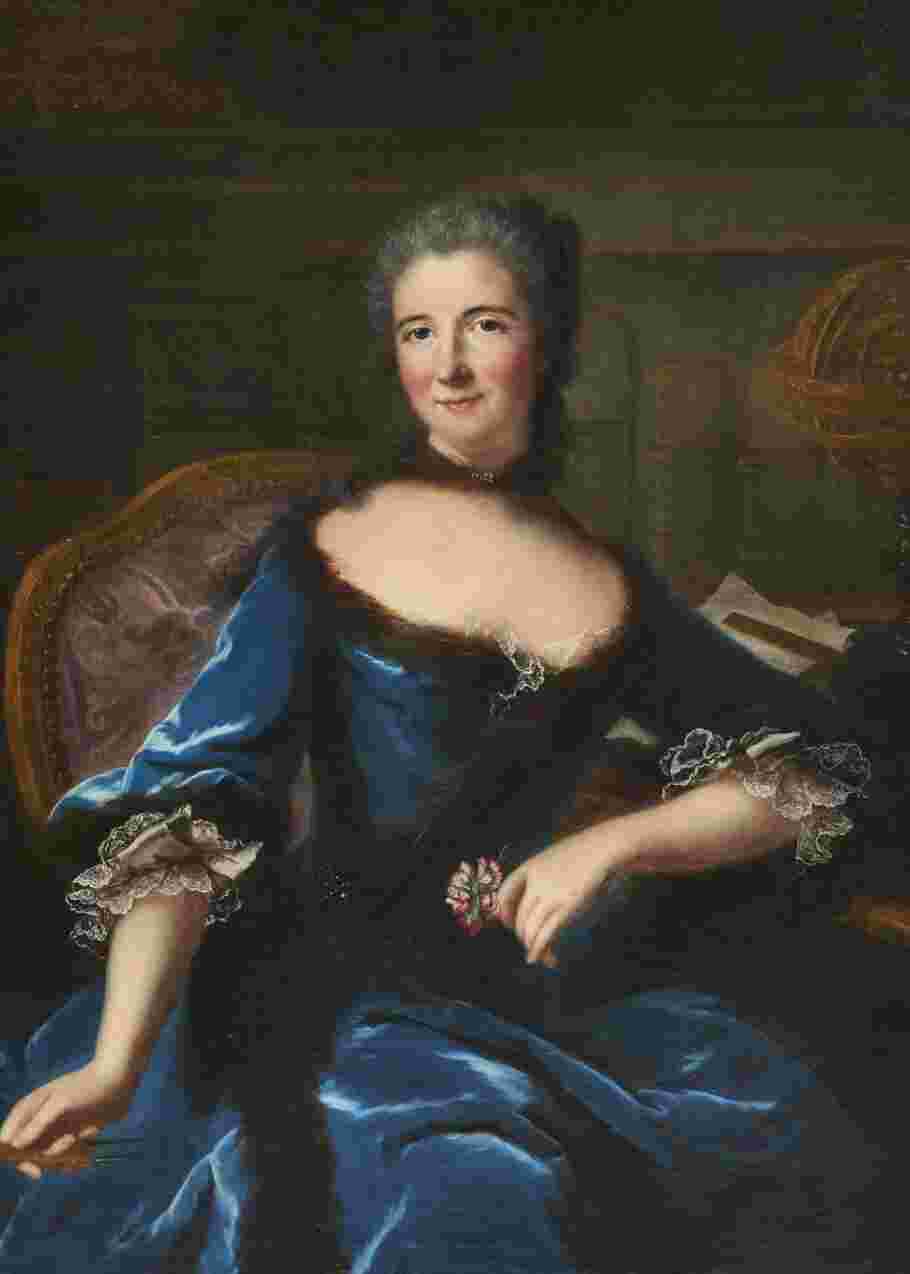
AH: What can we still learn from Émilie du Châtelet today? Where do you see her scientific and philosophical legacy?
AB: On the one hand, it is her independence of thought. In the confrontation between Cartesians and Newtonians, for example, she didn’t pick one side of the debate. She was neutral and appreciated each way of thinking. This is demonstrated in Foundations of Physics, where she dives into the thinking of Descartes, Newton and Leibniz all at once.
On the other hand, Discourse on Happiness is a wonderful example of her thinking at the level of personhood. There, she argues for independence and an unprejudiced approach to thinking and living – which has relevance for our current moment.
The ideas of the early Enlightenment – the critique of authority and the dogmas of the church – are very important also nowadays, where autocrats are finding more and more success. We can all learn from Émilie du Châtelet’s courage to go her own way, far from the rules and conventions of society.
Learn more in these related titles:
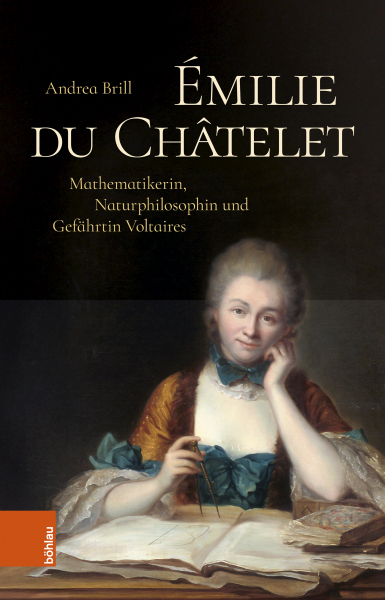
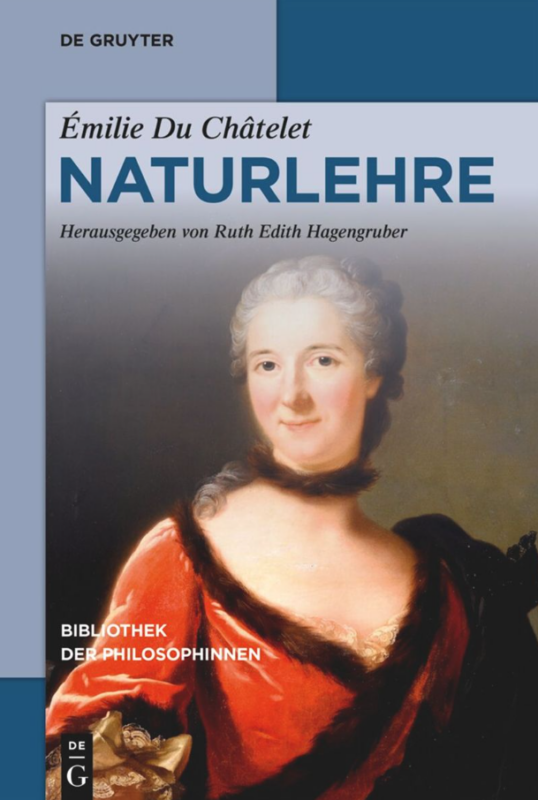
[Title Image: Lithograph portrait of Émilie du Châtelet, anonymous, dated 1818 – 1842. Public domain, via Rijksmuseum/Wikimedia]