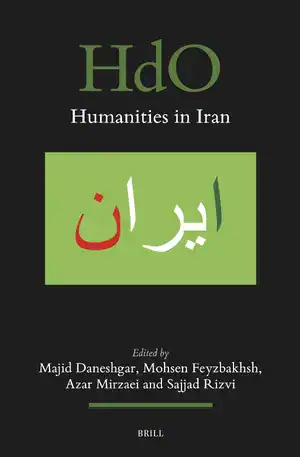
Humanities in Iran: In Search of Meaning
In recent decades, Iranian universities have been subjected to powerful political forces, leading to ongoing pressures on academic progress. What role can the humanities play in a society where academic life itself is so deeply contested?
In recent times, Iran has been at the centre of public discourse across the world as a site of contestation and war. This has led to questions about ‘what is Iran and who is an Iranian?’ These need not be essentialist questions but can constitute a pursuit for understanding culture and intellectual development in modernity. Universities in Iran, like in other contexts, are major sites for cultural contestation, social policy, and the construction of identity.
For more than a century, universities in Iran have been functioning with multiple concerns and orientations. While they were designed to contribute instrumentally to social policies on the production of science, the development of repositories of knowledge for citizens and for the welfare of society, they have often been a venue for national and global political discourse, subject to revolutions, elections, political setbacks, strikes, protests and even wars.
These pressures are reflected in the everyday workings of academic life. To hire faculty members and researchers, selection committees first look at candidates’ ‘identity and piety’ rather than their research achievements. To escape surveillance, some researchers even decide not to enter university life at all and only act as translators of Euro-American science and literature.
Enduring Hope
In that sense, universities in Iran are not wholly independent institutions that emerge organically from civil society; rather, they are formed by the government’s social and political policies and decisions. This has created a profound disconnect between universities and the wider public. Despite large numbers attending universities, most people are still alienated from these places. And yet many humanities researchers continue working on their particular subjects despite social, cultural, and, more importantly, economic restrictions.
The long history of this intellectual persistence is evident in the case of Ali Akbar Dehkhoda (1879–1956), who founded the ‘Dehkhoda Dictionary’ during the Pahlavi dynasty (1925–1979) and after the First World War. Systematic editing and translation of the dictionary took place after the Second World War under the supervision of the Pahlavi cultural and philosophical foundations with the aim of re-introducing Persian, Persian-Shi‘i and Arabic classics.
This movement further flourished following the Iranian revolution of 1979. Scholars in Iran have recently paid more attention to obscure materials compiled by royal officers and authors working for the Qajar kings, rulers and courts, suggesting that the production of knowledge in Iran has never been fully interrupted.
On ‘The Question of Iran’
One may ask a set of valid and complicated questions about the influence of the output of the humanities, echoing what the late Javad Tabatabai (1945–2023) lamented: To what extent are universities in Iran established and equipped to tackle ‘the question of Iran’? Further, how and under what circumstances might they contribute to a transregional study of ‘human’, ‘science’ and ‘humanities’?
“The final picture is perplexing, showing an academic system that wanders in search of meaning but is unable to comprehend ‘the question of Iran’.”
Can we imagine that the many thousands of universities, theses, and publications in the areas of the humanities and social sciences could not find either cures or solutions for social, cultural, and political ills and challenges? Or rather is it the case that the formal educational institutions in Iran – like many other parts of the world – are affected by political circumstances that include an assault on expertise often occasioned by identity politics?
On the one hand, there has been extensive investment in the re-introduction of pre- and post-Islamic Iranian culture in pursuit of what it means to be ‘Iranian’. On the other hand, universities in Iran feel obliged to promote nationalism and hence to exclude minority voices. The final picture is perplexing, showing an academic system that wanders in search of meaning but is unable to comprehend ‘the question of Iran’.
Eastern Lands
More recently, as an inheritance from the Western academy, scholars are prompted to ‘decolonise’ the humanities in Iran. Many Iranian scholars have responded to this call by proposing an Islamized version of the humanities. This idea entered Iran largely through other Islamic contexts with which Iranians have less familiarity. It also marks a shift from the Third-Worldism of the period after 1979 to a more identity-driven approach in the last couple of decades that reads decolonisation as the removal of ‘Western influence’.
Yet in this process, scholars have ignored other experiences and further overlooked their ‘East’, an area with which they have greater historical and cultural ties. The longer history of Asianism and engagement with the East even before colonialism is forgotten.
‘Iranian orientalism’ is thus only a selective translation of Euro-American orientalism. Universities in Iran have unfortunately been unsuccessful in terms of producing scholars who are well equipped with knowledge and languages of their East, despite the establishment of some institutions that could produce such knowledge from the 1970s onwards.
Despite these challenges and cognisant of their cultural role, the humanities in Iran continue to grow and even flourish under differing and in some cases quite constraining circumstances. In the present moment, books are published and discussed as bombs continue to fall, but it is unclear what the future holds for the humanities and to what extent it will be able to speak to and inform the lives of Iranians and other Asian communities.
Learn more in this related title from De Gruyter Brill
[Title image by Andrey Kulagin/iStock Editorial/Getty Images Plus]