Recovering the Legacy of Hedwig Klein
Institutions failed her completely, yet she did not fail scholarship, says Sabine Schmidtke of Hedwig Klein—a major yet (almost) forgotten Jewish scholar of Islamic Studies. We spoke with Schmidtke about Hedwig Klein’s tragically short but impactful life and the misconceptions that have obscured her legacy for far too long.
As influential as they might have been, the lives and work of women scholars all too often disappear from history or survive only in distorted form—at least until someone takes the trouble to set the record straight. Hedwig Klein’s story is one such case.
Born in Antwerp in 1911 to a Hungarian oil wholesaler and his wife, Klein grew up in Hamburg, where she would later become an ambitious student of Islamic Studies, Semitic Studies and English Philology. Despite earning the highest possible grades, her academic career was cut short because she was Jewish. After a failed attempt to escape to India in 1939, and under the most precarious conditions, she continued working on the Harrassowitz project: a dictionary of modern written Arabic, later published as Hans Wehr’s “Arabisches Wörterbuch für die Schriftsprache der Gegenwart.” The project would go on to spark controversy decades later over its alleged connection to Adolf Hitler’s “Mein Kampf.” In 1942, Hedwig Klein was deported to and murdered in Auschwitz.
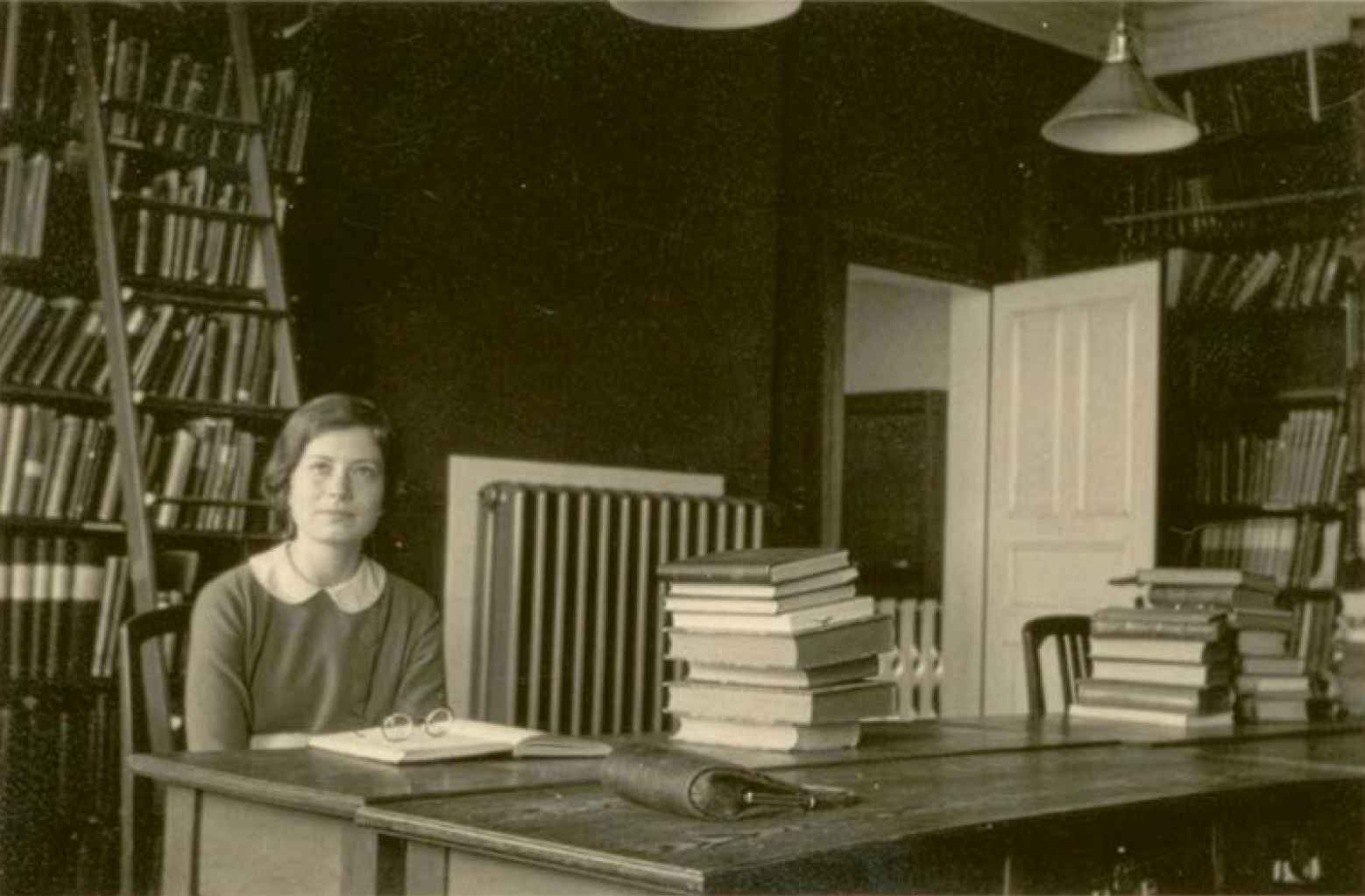
Why don’t more people know about Hedwig Klein’s fascinating life story? And what is really behind the claims tying her dictionary to an Arabic translation of Hitler’s most notorious political text? Sabine Schmidtke, a leading scholar of Arabic and Islamic Studies at the Institute for Advanced Study in Princeton, believes it is time to take a deeper look. In her new book, “Scholar of Islam, Victim of the Holocaust: The Tragic Story of Hedwig Klein,” she presents the results of her painstaking research on unpublished archival materials—and its implications for the narrative around Hedwig Klein’s scholarly work.
We talked to her about the challenges, the revelations and the misconceptions addressed in her new work—and why, more than ever, Hedwig Klein’s story matters today.
De Gruyter Brill: What first drew you into researching the life and work of Hedwig Klein?
Sabine Schmidtke: Paradoxically, it was misinformation that drew me in. Since 2014, a wave of blogs and online essays about Klein and the German Arabist Hans Wehr had appeared, but most of them focused less on her than on Wehr and the sensational claim that her dictionary work served an Arabic translation of “Mein Kampf.” I was struck by the lack of documentation and the complete absence of any attempt to situate her biography within a larger framework.
Klein was a brilliant Arabist in her own right, born in Antwerp and raised in an observant Jewish household in Hamburg, who studied under Rudolf Strothmann, Walter Windfuhr and Arthur Schaade. The dissonance between the myth and the real scholar—murdered at Auschwitz in 1942, aged 31—pulled me into the archives, where correcting the record became a scholarly obligation.
DGB: At what point did the idea for a book take shape?
SS: Very few primary sources survive—beyond her Abitur certificate and dissertation, there are only some letters to former teachers and mentors. That scarcity forced me to cast a wider net, and my search became an intriguing journey through a plethora of archival collections across Europe, Israel and the United States, each yielding clues to her familial, social and scholarly world.
“Klein’s fate was a microhistory with major implications for the trajectory of Islamic studies, a reminder of how the Holocaust reshaped the production of knowledge about Islam.”
As fragments accumulated—her family’s fate, her thwarted flight to India in August 1939, her contribution to the Harrassowitz dictionary project, her deportation—I realized the story could not be compressed. The decisive moment came when I understood that Klein’s fate was a microhistory with major implications for the trajectory of Islamic studies, a reminder of how the Holocaust reshaped the production of knowledge about Islam. Only a book could hold person and rupture together.
DGB: What question did you find yourself returning to repeatedly?
SS: I kept returning to what academic freedom truly means. Klein was denied her degree, barred from Hamburg’s libraries, excluded from German scholarly life and finally murdered—yet her scholarship survived. When Fritz Jäger, dean of the philosophical faculty in Hamburg, retracted the imprimatur of her dissertation in December 1938, and De Gruyter refused to publish it because she was Jewish, she commissioned 50 privately printed copies and distributed them herself to colleagues abroad, even reaching the sultans of Oman and Zanzibar. That act haunted me.
I kept asking how a scholar, stripped of every institutional protection, could still refuse the regime’s deeper aim: to sever her from the community of inquiry. The paradox that institutions failed her completely, yet she did not fail scholarship, became the moral center of the book.
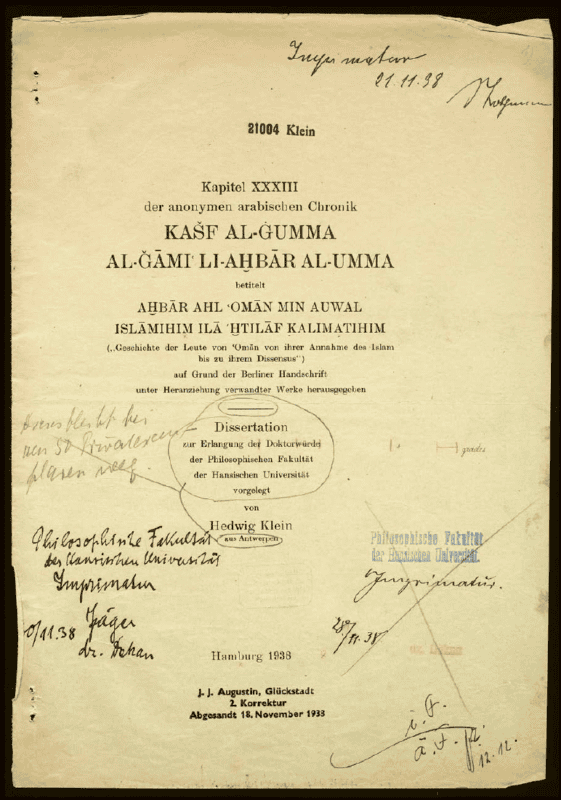
DGB: Which source, object, person or archive most changed the direction of your thinking about Hedwig Klein’s story?
SS: One document decisively changed my thinking: Werner Otto von Hentig’s letter of November 18, 1938. This very memo lay at the heart of Stefan Wild’s influential 1985 study, which created the enduring impression that the lack of a reliable Arabic dictionary during the translation of “Mein Kampf” prompted the Foreign Office to fund the “Neu-arabisches Wörterbuch.” But reading the letter in full, alongside the surviving correspondence among Heinrich Becker, Arthur Schaade and others, revealed something quite different: von Hentig was simply asking the Foreign Office library to procure a few standard reference works—dictionaries by Belot, Badger and al-Bustānī—which were then borrowed from the Staatsbibliothek. There was no causal link whatsoever between the two projects. That realization reframed my task: to correct a distorted narrative and restore Klein as the brilliant scholar she was.
“Recognizing [her] modest, properly documented role … freed Klein from the mythology that had reduced her to a footnote in Hans Wehr’s story and let her stand on the merits of her own scholarship.”
Equally important, the archival record dismantles the sensational image of Klein as central to the dictionary. She was, in fact, one of about a dozen contributors, working for less than a year, from September 1941 to the spring or early summer of 1942. Compared to major participants such as Taher Khemiri and Annemarie Schimmel, who worked far longer, her contribution was minimal in quantity, though superb in quality. Crucially, she was paid fairly, at a rate equal to that of the other participants. Recognizing this modest, properly documented role was itself a corrective: It freed Klein from the mythology that had reduced her to a footnote in Hans Wehr’s story and let her stand on the merits of her own scholarship—above all, her dissertation—rather than on an inflated and inaccurate legend.
DGB: Were there particular challenges in working with fragmented, multilingual or ambiguous source material?
SS: Enormously so. Only fragments survive, scattered across dozens of archives in Basel, Göttingen, Halle, Hamburg, Jerusalem, Koblenz, Leiden, London, New Haven, Nürnberg, Tel Aviv and beyond. Nazi bureaucratic records are euphemistic and self-justifying, so I constantly read against the grain, treating administrative silence as evidence. Multilingualism added further layers: Klein’s own scholarly voice survives partly in her Arabic critical edition of the thirty-third chapter of the Kashf al-ghumma, an eighteenth-century Omani Ibāḍī chronicle, demanding movement between philology and historical inference.
The hardest discipline was resisting the temptation to fill gaps with speculation—the very error that had produced the online mythology I set out to correct. Where the record fell silent, I marked that silence honestly.
DGB: What makes Hedwig Klein’s life and work especially important to study now?
SS: Her story is a microhistory with far-reaching implications. The Nazi seizure of power in 1933 was a turning point for Oriental studies: It ended the leadership of German-language scholarship and forced the internationalization of the field, as Jewish scholars and students were expelled, murdered or dispersed across the world. Klein’s fate reminds us how completely the Holocaust reshaped the production of knowledge about Islam—not only in Germany but globally.
“Recovering Klein’s life … shows that intellectual traditions are shaped as much by who was destroyed as by who flourished.”
At a moment when academic freedom, institutional complicity and the ethics of scholarship are urgently debated, recovering Klein’s life restores a missing dimension. It shows that intellectual traditions are shaped as much by who was destroyed as by who flourished—the research never produced, the students never taught, the traditions never founded, lost beyond recovery.
DGB: What do you hope readers will take away from your book?
SS: I hope readers grasp that Klein’s story is ultimately about the fragility of civilization—how quickly institutions built to nurture research and learning can become instruments of exclusion and destruction—and about the stubborn persistence of truth. Her 50 privately printed copies, sent out by a young woman denied her degree and soon her life, outlasted the Third Reich by generations; her edition even became the sole surviving witness to a Berlin manuscript destroyed in a 1945 air raid. There is quiet vindication that the book is now published by De Gruyter, the very publishing house that once rejected her.
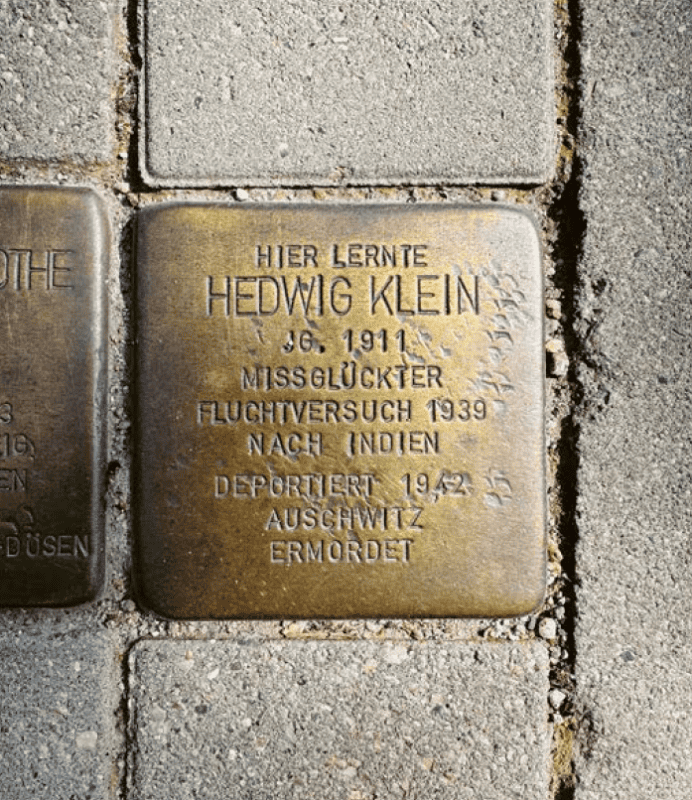
Above all, echoing Margot Friedländer’s words that open my book—Seid Menschen—I want Klein remembered not merely as a victim but as a colleague and scholar whose work still illuminates the Islamic past.
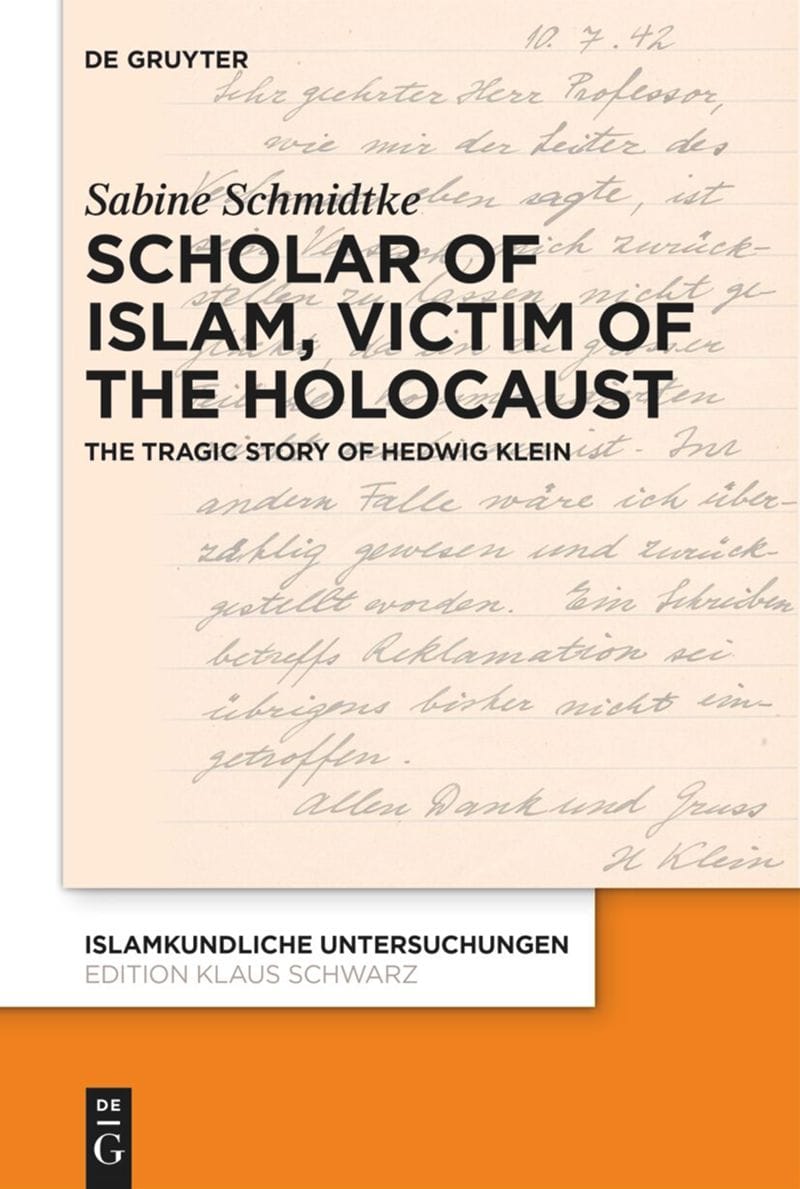
Learn more in this related title from De Gruyter Brill
[Title image: Staatsarchiv Hamburg]