De Gruyter Brill Partners with Consensus to Enhance Research Discovery
Our new partnership makes it easier for researchers to discover trustworthy humanities scholarship using AI.
We are pleased to announce our partnership with Consensus, an AI-powered academic search platform.
Consensus allows researchers to ask questions and search key terms relevant to their work. The tool retrieves the most relevant publications from over 220 million peer-reviewed research papers, then organizes and analyzes these results in depth. Compared to common academic databases, the query matches are not just listed but ranked by relevance based on research quality signals such as journal reputation and impact. Alongside the search results, Consensus provides a succinct and fully-cited AI analysis section presented to the user in an easy-to-interpret interface with engaging visualizations.
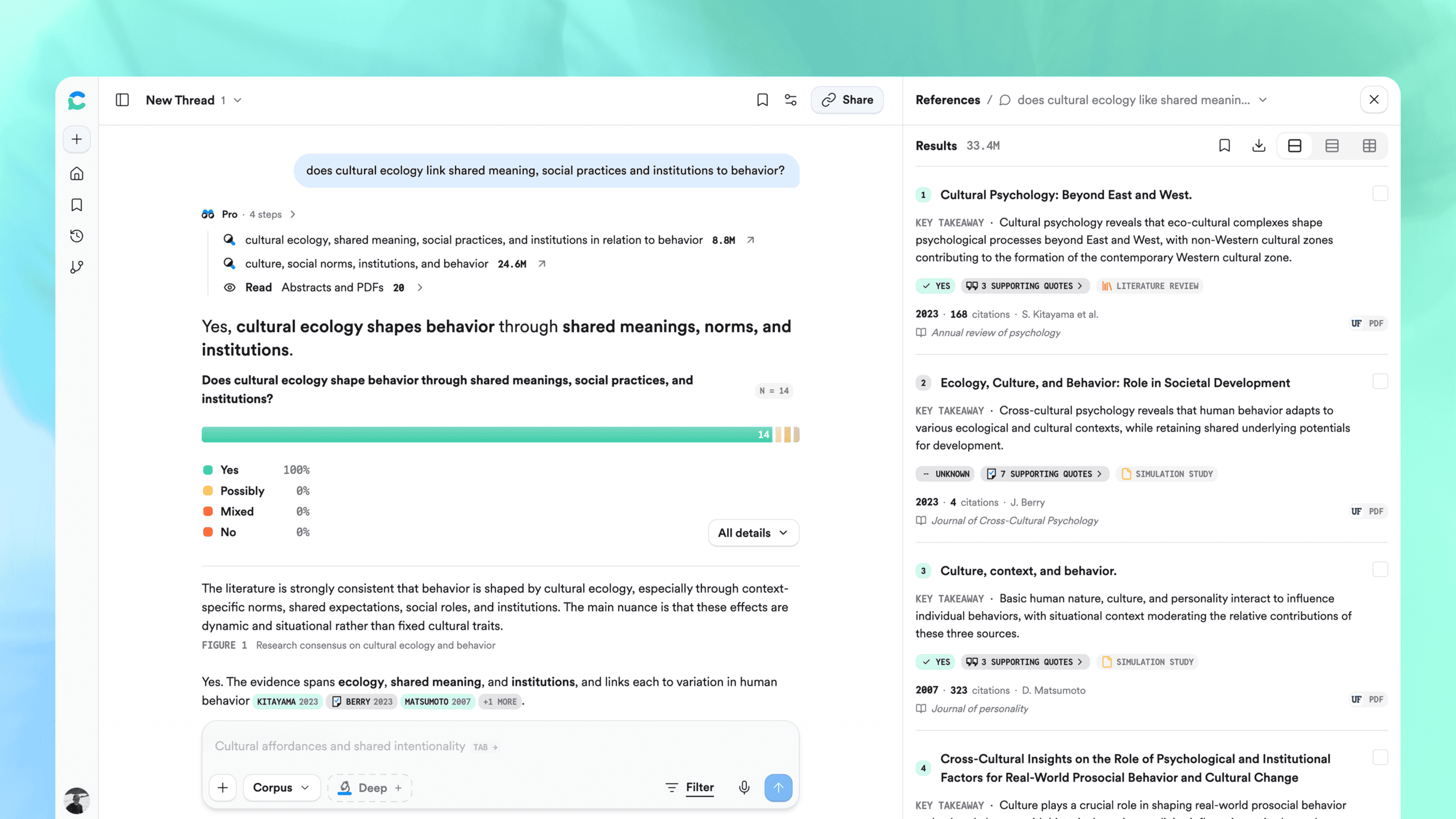
This allows researchers to identify the most credible publications efficiently and explore their contents through concise summaries or the original sources directly. Importantly, Consensus only reviews real, retrieved papers rather than inventing sources.
Through our new collaboration, Consensus will be able to index and analyze the full text of De Gruyter Brill journal content to improve discovery for researchers using its platform. Importantly, as part of this partnership, our content is not used to train AI models. Instead, it supports search and discovery features designed to help users identify relevant research and connect directly to the original published source.
Bringing Humanities and Social Sciences Research into AI-Powered Discovery
Humanities and Social Sciences scholarship plays a critical role in understanding our history, cultures, institutions, and societies. Yet much of this research has been less visible in emerging AI-driven discovery tools, which have often focused on scientific and technical literature.
With a publishing heritage that spans centuries and a portfolio covering fields including History, Philosophy, Theology, Classics, Linguistics, Law, and the Social Sciences, De Gruyter Brill is uniquely positioned to help address this imbalance.
By making our journal content discoverable through Consensus, we are helping researchers find relevant scholarship more efficiently while ensuring that the depth and complexity of Humanities and Social Sciences research remains part of the scholarly conversation.
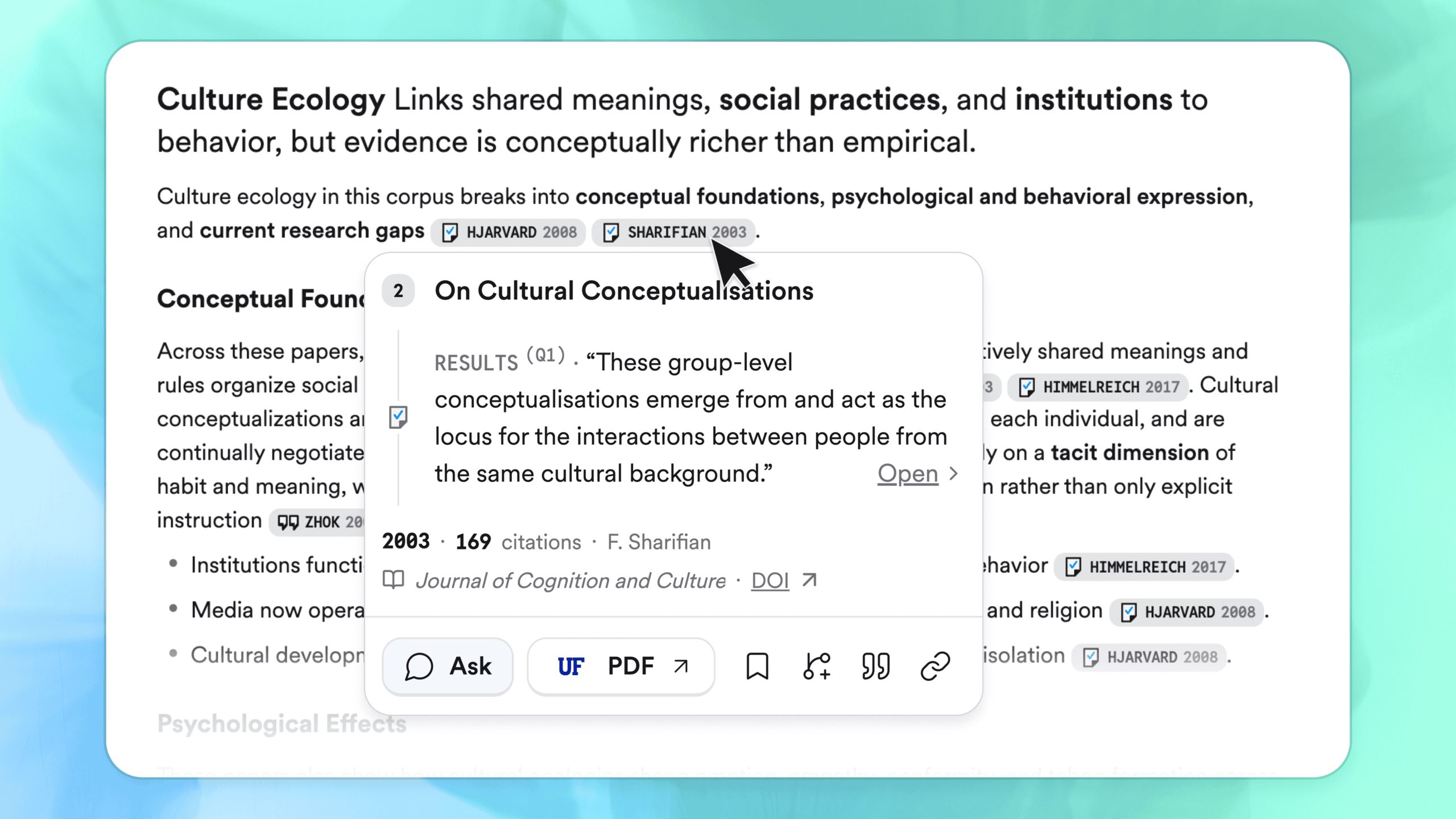
Supporting Authors and Responsible AI Innovation
At De Gruyter Brill, we believe that innovation in research discovery should strengthen—not replace—the connection between readers and original scholarship. The partnership with Consensus is built on that principle. Consensus directs users back to the published source, creating new pathways for researchers to discover and engage with the work of our authors. Greater visibility means greater opportunities for scholarship to inform future research, teaching, and debate.
As AI becomes an increasingly important part of the research process, sustainable partnerships between publishers and technology providers will be essential. By working together, we can support new forms of discovery while maintaining the integrity, attribution, and value of scholarly publishing.
Looking Ahead
Our partnership with Consensus represents an important step in ensuring that Humanities and Social Sciences research remains visible and discoverable in the AI era.
For researchers, it means faster access to relevant scholarship. For authors, it offers new opportunities to reach readers. And for De Gruyter Brill, it is another way of advancing our mission to connect knowledge with those who seek it.
We look forward to seeing how this collaboration helps researchers engage with Humanities and Social Sciences scholarship in new and meaningful ways.
[Title Image by vackground via Unsplash]