APE Conference 2026: Scholarly Communication at a Turning Point (Day 1)
What does it take to uphold research excellence? What do librarians think about AI in the scholarly environment? How can we combat inequalities in academic publishing? This year’s APE conference tackled these questions and more. Here are the key highlights of the first day.
Every year, the APE Conference (Academic Publishing in Europe) brings together a wide range of stakeholders in scholarly communications and scientific publishing. Held, as usual, at the historic ESMT in Berlin, Germany’s leading business school, this year’s APE was all about academic integrity and the maintenance of impeccable standards in scholarly publishing, as they become threatened by a new era of paper mills, fake ‘research’ and the consequent erosion of public trust.
It was a conference of eloquently expressed ideas, presented by stakeholders across the industry who showed passionate commitment to upholding the legitimate pursuit and dissemination of knowledge.
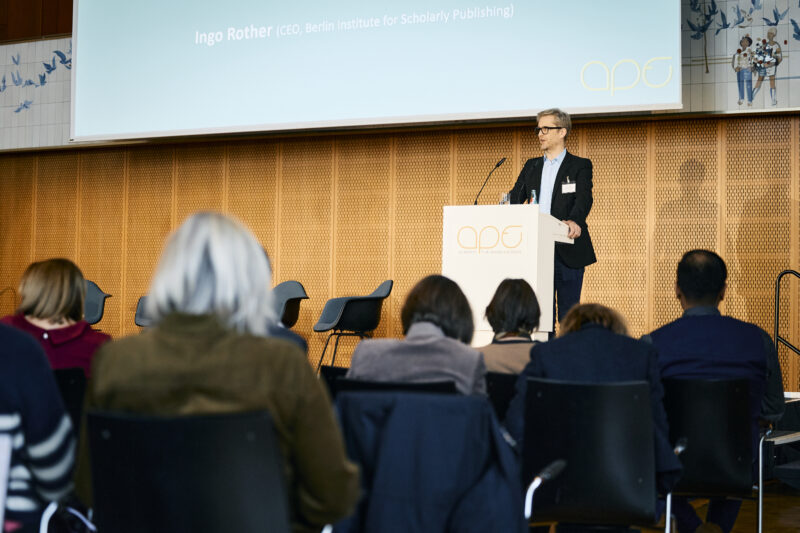
We shall try to capture the highlights in a post for each day of the conference. This post is about Day 1. The highlights of Day 2 can be found here.
Keynote: An Independent Publishing Industry
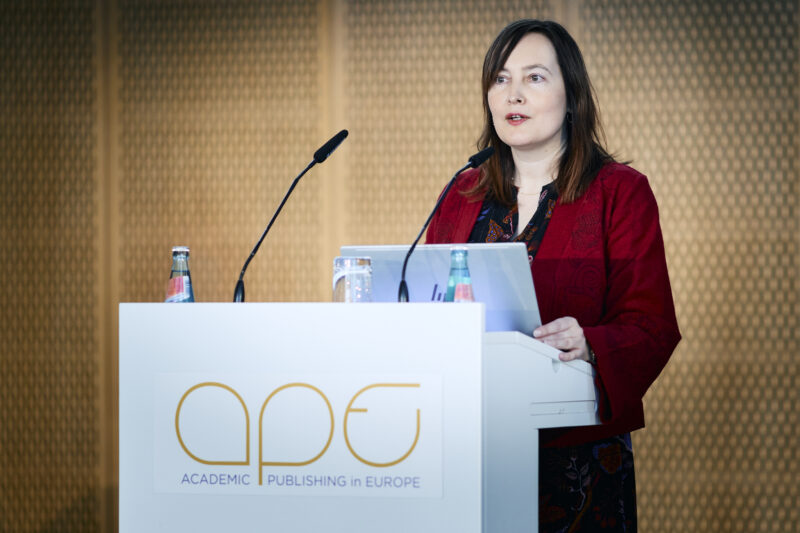
The keynote speaker was Caroline Sutton, the CEO of the International Association of Scientific, Technical and Medical Publishers (STM). Immediately picking up on the main theme of the conference, she said that trust in scientists is currently pretty high, but that misinformation was still identified as the second highest risk in 2025. “We now live in a world where people increasingly don’t know whom to trust. It is for the publishing community to come together and save the library in the face of those trying to burn it down” – i.e., the propagators of fake news and fake research. Caroline said that continuing checks and balances are essential.
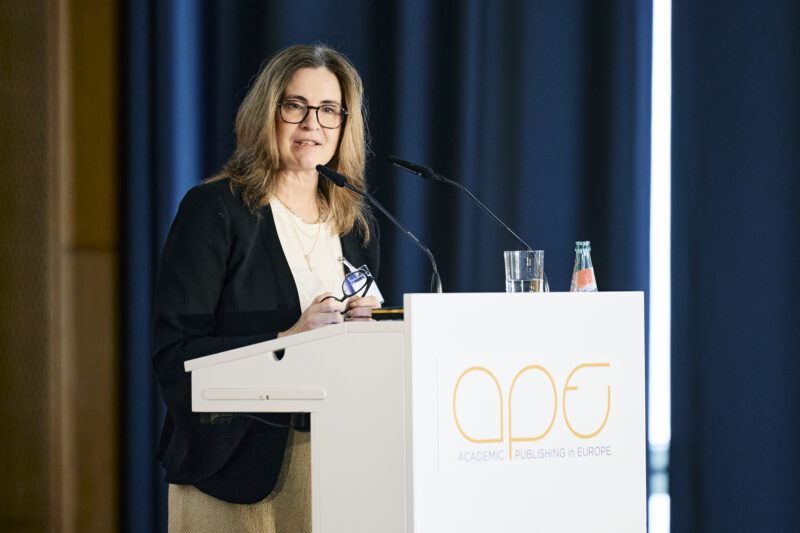
After the keynote, the panel session, sometimes accompanied by formal presentations, sometimes not, was the main vehicle used for discussion at the conference. This proved extremely effective at an event devoted not only to the formulation of ideas but of capturing them within a multi-stakeholder context.
Shaping the Future of Science: A Multi-Stakeholder Dialogue
“Shaping the Future of Science” was a thought-provoking session in which different stakeholders in the industry discussed how the concept of academic excellence is enduring, the kinds of reward system that align with integrity and how peer review can be made to work in a world where science is expected to combine rigour with excellence.
Christopher Smith, of AHRC / UKRI and Science Europe, said that a major recent change was that there is much greater awareness of how science is embedded in the economy. Consequently, the idea takes precedence over the individual, achievement over process. This represents an ideological shift that separates the researcher from the research.
Lorela Mehmeti, an early career researcher at the University of Bologna, said that young researchers perceive excellence to mean shifting to more transparency – i.e., changing the conditions within which research is carried out. Research may lose its power if the influence of individual cultures is ignored.
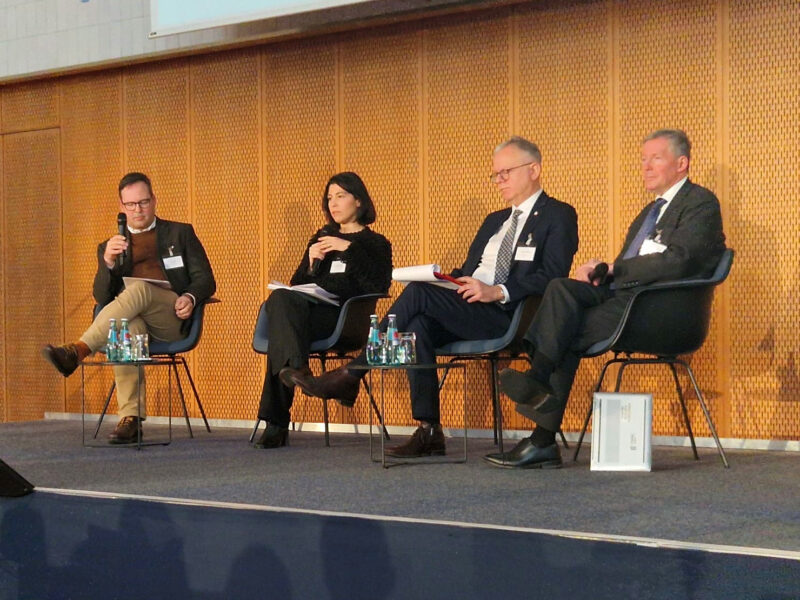
Pawel Rowinski, of ALLEA, said that the concept of research excellence must embrace academic freedom, especially in politically sensitive contexts. Research must be conducted within a living framework that connects quality with values.
Max Voegler, of Elsevier, who moderated the session, agreed. He said that there was now a need to think about how different scholarly communities could intentionally come together. There followed an intricate discussion on the future of peer review. One conclusion the panel reached was that increased interdisciplinarity makes it necessary for reviews to be addressed to different groups without interfering with excellence. There is an important role for learned societies here – they could start updating the processes of peer review at a national level in their own countries.
Safeguarding Research: The Role of Academic Publishers in an Era of Political and Public Pressure
The panel was moderated by Lou Peck, The International Bunch. The main speaker was Ilyas Saliba, Research Fellow at the University of Erfurt, Chair of International Relations at the Faculty of Economics, Law and Social Sciences, and the panellists were Sarah Phibbs, Director of Equity & Inclusion, STM and Louise Schouten, VP of Product Development at De Gruyter Brill.
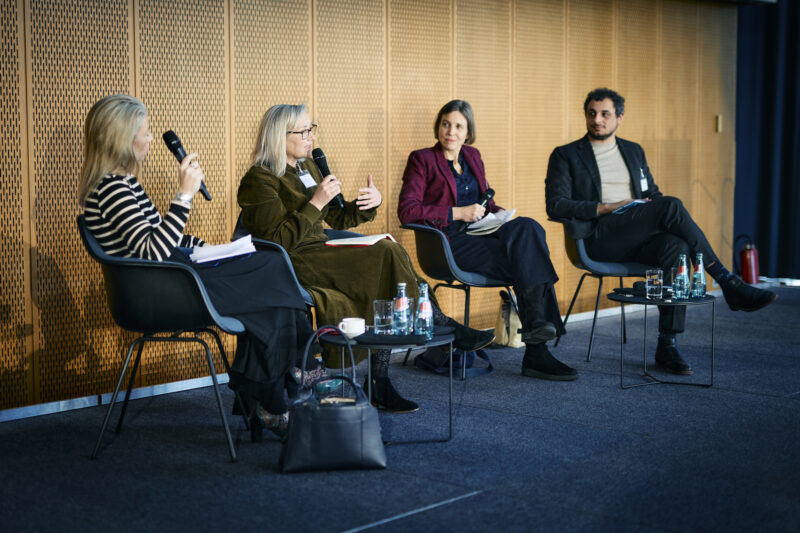
Ilyas said it was essential to measure academic freedom because it is the central pillar of an open and democratic society. Louise said that a publisher can only do so much to safeguard the integrity of research – including making sure that editorial boards are aware of the pitfalls of fake work and asking editors and authors to comply with COPE guidelines. Sarah said that the publishing industry is making progress in these vital areas but that the problem continues to grow and “we don’t know what we don’t know.”
Changing Library Priorities in an AI World
The session “Changing Library Priorities in an AI World” was moderated by Dominique de Roo, Chief Strategy Officer at De Gruyter Brill. The panellists were University Librarians from 3 different continents: Beau Case, Inaugural Dean of Libraries at the University of Central Florida; Iman Magdy Khamis, Director of Northwestern University Library in Qatar, and Professor Jianbin Jin, Director of Tsinghua University Library, China, and Professor at Tsinghua University’s School of Journalism and Communication.
Dominique presented some findings from a global study recently commissioned by De Gruyter Brill from Gold Leaf to discover how AI is being viewed and used at academic libraries and institutions across the world. She said that the session would be about the contrast between publisher enthusiasm for innovation versus librarian cautiousness: how can innovation be driven while safeguarding trust?
She pointed out that although 90% of the librarians who responded to the study said that use of AI was permitted at their institutions, legitimacy is not the same as trust. The study found that significant numbers of librarians are either resistant or actively hostile to AI. She went on to name the most-used AI applications globally – the top 3 are Copilot, ChatGPT and Turnitin – and to illustrate the gap between use of the free and paid versions. She concluded by saying that librarians are concerned about the effects of AI on data privacy and surveillance; academic integrity and cheating; environmental impact; vendor over-hype; and loss of human judgement. If AI is to be embraced within the scholarly environment, these concerns must be addressed.
Professor Jianbin Jin said that librarians have a responsibility to introduce new applications to scholars and students and to integrate a multiple approach to research. AI can be used to search the knowledge base for hard-to-process topics. It can also make a huge difference to labour-intensive activities such as cataloguing. AI enables more efficient use of the library, can suggest change programmes to the academic community, and can be used to improve or enhance digital literacy. As a country, China will embrace AI for daily activities; some of the AI tools being produced by publishers can be part of this process.
Iman Magdy Khamis said that Dominique’s presentation showed how confused librarians are about AI – “we feel we have to do something, but how can you trust something or talk of its ethical use when you don’t know what’s happening inside it?” Copilot does make librarians feel a bit safer, because it is part of its agreement that individual libraries’ data will not be used to ‘train’ its LLM tool. Iman also observed that ‘privacy’ holds different meanings for communities in the North and the global South. Nevertheless, a myriad of ‘good’ uses has been found for AI by librarians across the world – for example, to create subject headings, systematic indexing, cataloguing, document processing and to use heat maps to show where the majority of students are studying. Robotics can also be used to help autistic students and for feature recognition – AI is a bigger thing than just an application.
Beau Case declared at the outset that he is a “fan of AI”. He said that he was not content with his library being or being perceived as a study hall. “If we are not moving the needle of research and teaching, then we are failing.” Last summer his university was entrusted with the development of extra-curricular AI activities, and it was a game-changer. The day-long event focused on AI in the workplace and asked the question, what happens to students when they leave the university? The event showcased AI technology and held sessions on ethics. Beau would like to ask the global community, “What are you developing in the classroom?” He added that all libraries have collections of distinction. UCF specialises in aerospace and hospitality tourism. He now wants to build his own AI application to enable libraries to publish and specialise in highly technical areas. He invited any librarians who were interested to contact him.
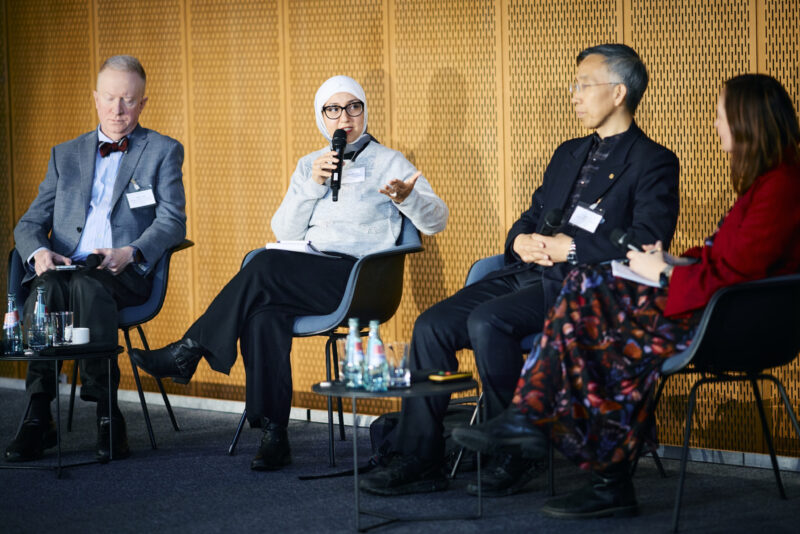
The panel went on to discuss how the librarian’s role is changed by AI, particularly in the context of information science and its specialisms and policies and the maintenance of research integrity. The panellists felt that although there was a lot of talk about ethics and AI, little international initiative has been taken in this area.
There was a suggestion from the audience that libraries could collectively take ownership of and develop scholarly ownership of AI – otherwise they would “simply be ceding the ground to” the major AI players. Beau Case agreed with this proposition but said that it would be extremely difficult to gain consensus.
Professor Jin, picking up on Dominique’s opening comment about the tensions AI forges between publishers and librarians, concluded the debate by saying that the relationship is changing and needs to be modified – and that AI is a catalyst as well as a disruptor; but the modifications can be incremental, not radical. Harmonies can be achieved.
If you are interested in learning more about the study commissioned by De Gruyter Brill, you are very welcome to join this webinar on 29th January. If you register but are unable to attend in person, you will be sent a link to a YouTube of the recording after the webinar has taken place.
From Access to Inclusion: Tackling Systemic Barriers in Global Scholarly Publishing
This panel was moderated by Colleen Campbell of the Max Planck Digital Library. Panellists were Ncoza Dlova, Dean, School of Clinical Medicine, University of KwaZulu-Natal; Matthew Giampoala, Vice President Publications at the American Geophysical Association; and Glenn Truran, Executive Director, SANLiC.
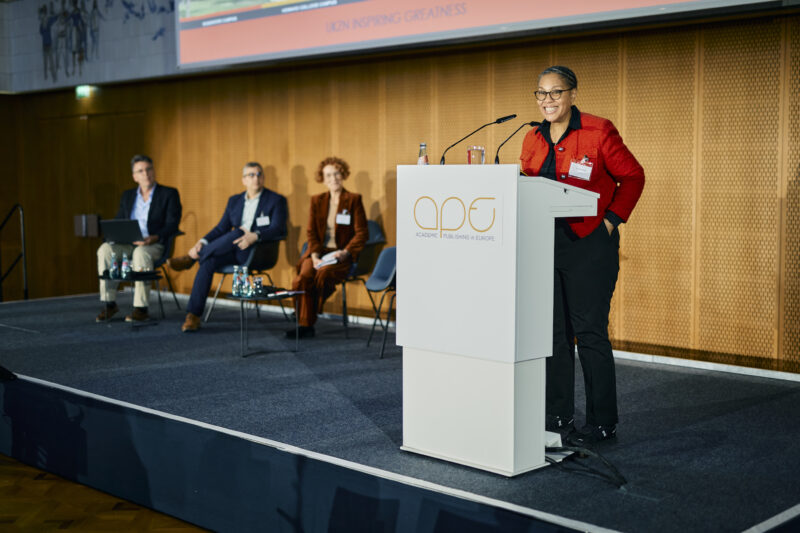
Although the debate was based on the premise that OA is not a business model but a prerequisite of equitable publishing, it was immediately acknowledged that one of the most severe ‘unintended consequences’ of OA is to make publishing unaffordable by scholars working in certain communities, institutions and disciplines. Extensive illustrations of this unjust inequality were put forward. Conclusions reached were that greater transparency of how APC prices are arrived at is needed and, above all, that a central international fund for those who otherwise have no means of paying should be created.
[Title image by Photothek/Sebastian Rau]