“Stories Provide a Safe Space for Discussion” – A Conversation about African Folktales in Youth Crisis Management
Adolescence means finding your place in the world—facing challenges big and small, even sometimes existential. In times of upheaval, could age-old folktales be part of the answer? In this interview, the editors of a new book on storytelling and youth crisis management in Kenya and Ethiopia make their case.
Whether it’s about bullying, poverty or abandonment—in times of crisis, a teenager’s first impulse might not be to seek help from an old folktale. In fact, it’s probably one of the very last things they would consider. But what if a story held the key to navigating their own personal difficulties—a story that might never have been written down?
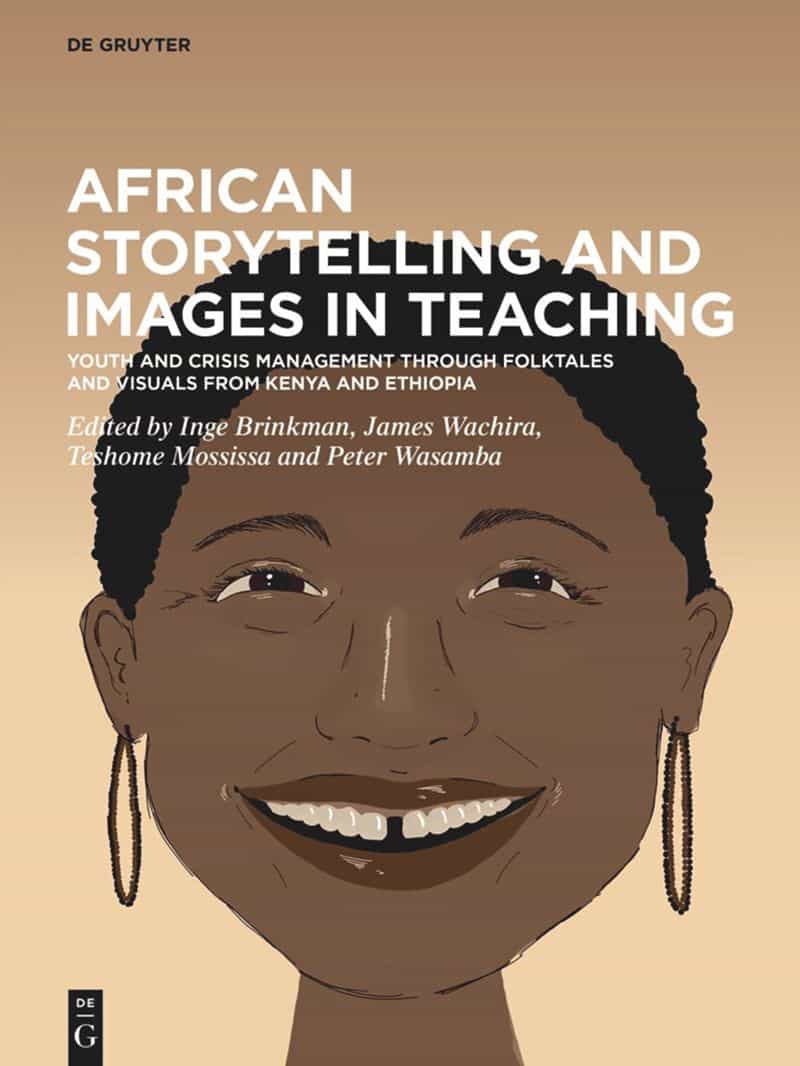
Reconnecting adolescents in Africa with oral folktales relevant to their present lives is the mission behind a new open access book, African Storytelling and Images in Teaching: Youth and Crisis Management through Folktales and Visuals from Kenya and Ethiopia. Its editors—Inge Brinkman, James Wachira, Teshome Mossissa, and Peter Wasamba—together with visuals coordinator Gerti Wouters, are all part of the project Oral Literature for Development (OL4D), which brings together upcoming and established scholars from Jimma University in Ethiopia, the University of Nairobi in Kenya, and Howest and Ghent University in Belgium.
For the book, the editors assembled a variety of contributors who transcribed, translated, and analyzed eleven oral narratives from five African languages. Gerti Wouters photographed many of the project’s activities. Based on these stories, the team also provides educational guidelines for teachers to engage with young people facing crisis situations.
Eager to learn more about this unique approach and the “stories behind the stories,” we invited the five of them for an interview.
De Gruyter Brill: What first drew you to combining oral narrative with crisis-management education for youth?
Inge Brinkman: Folktales have an interesting structure. They often begin with a crisis situation: a famine, a boy who wishes to marry a rich girl, an ogre threatening to eat children, or a small animal determined to defeat a larger one in a race.
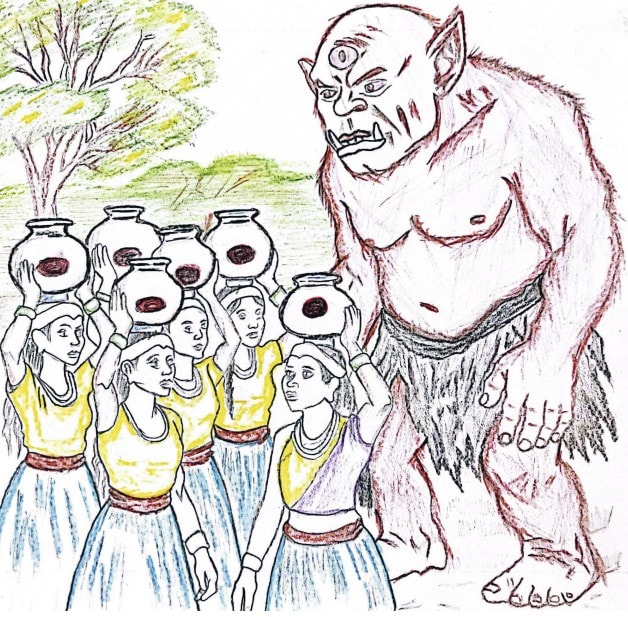
Over the course of the story, the crisis is usually resolved: “And they lived happily ever after.” The solutions proposed in such stories often represent an ideal, although some tales end in a more gruesome way. Nevertheless, stories encourage us to reflect on crisis situations and how they might be addressed. They also provide a safe space for discussion; because folktales are fictional, we can explore difficult issues without immediately relating them to our own personal experiences.
In many cases, the protagonist is a young person, and the themes explored in folktales often resonate with the challenges of adolescence. At the same time, while very young children in Africa may still engage with storytelling traditions, adolescents in particular no longer value these traditions and may even look down on them. By reconnecting youth with their storytelling heritage, we help them take pride in their own history, draw on their cultural knowledge when facing crisis situations, and revalue connections across generations.
These issues are central to our VLIRUOS-funded Team project: Oral Literature for Development’ (OL4D).
DGB: At what point did the idea for a book take shape?
Peter Wasamba: Handling oral narratives exploring how youth cope with crises in Kenya and Ethiopia was an exciting project. We were keen to return to traditional approaches used in African communities for years to address challenges such as poverty, health, ecology, inclusion/exclusion, and gender concerns. These narratives were in the original languages of African communities.
“We were keen to return to traditional approaches used in African communities for years to address challenges such as poverty, health, ecology, inclusion/exclusion, and gender concerns.”
We discovered that if we documented the narratives and translated them into English, we could increase access to these interesting narratives. Since our target was young people, we decided that a book tailored to educational institutions would curate the research outputs of our project.
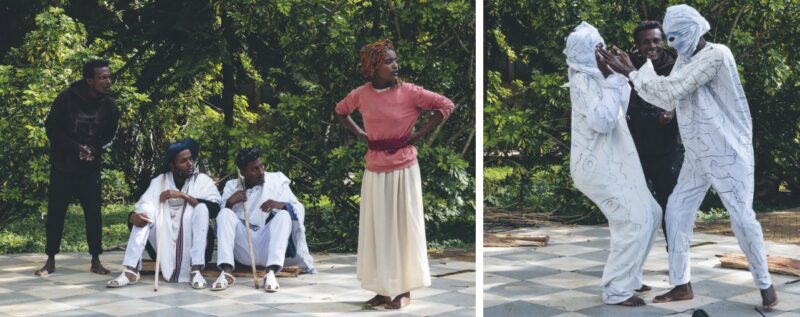
Gerti Wouters: During the first annual meeting of our project OL4D in Kwale, Kenya, we attended a performance by a group of young people engaging with storytelling and theater, called the Kwale Arts Troupe. I took many photographs and, once I was back home, I realized that they beautifully captured the atmosphere of the performance.
During the second annual meeting in Jimma, Ethiopia, I again had the opportunity to photograph a performance, this time from students of the Performing Arts Department of Jimma University. That experience inspired the idea of creating a book in which the stories would be illustrated with photographs whenever possible.
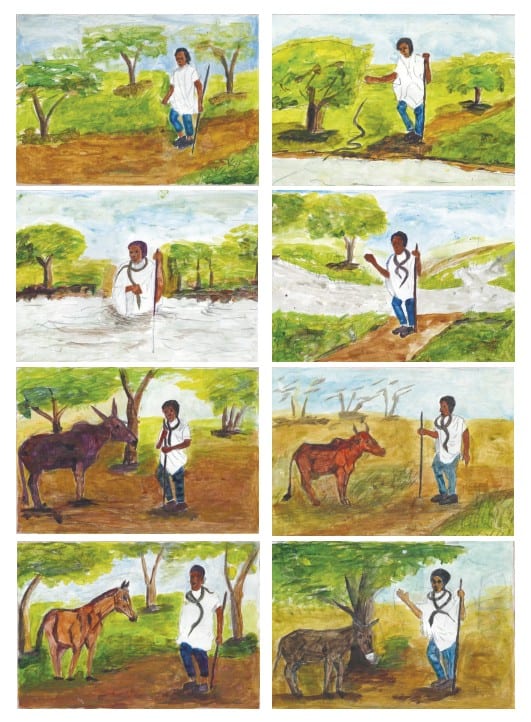
Of course, I did not have photographs for every story, and we therefore asked the project participants to take pictures during their fieldwork. To prepare them for this, I gave a short online introduction to photography. For stories that could not be illustrated with photographs, we commissioned local artists to create illustrations.
DGB: What was the most surprising thing you learned while editing this volume?
James Wachira: The extent to which oral narratives remain understudied in Eastern Africa. The title of each story in this volume hints at the existence of variations of the same story.
Inge Brinkman: The stories really can lead the reflections in many directions. Also, a story from Kenya or Ethiopia can work in Belgium or Sierra Leone: The debates always differ per historical and cultural context, but the thematic concerns speak to all.
DGB: What question did you find yourself returning to again and again?
James Wachira: Is my translation of a narrative and its accompanying expression accessible to a reader who is unfamiliar with a given story and its source?
DGB: Were there particular challenges in working across different languages and oral sources? If yes, how so?
Teshome Mossissa: Translation is a demanding activity in general, and translating literary texts is particularly challenging compared with translating texts in other disciplines, due to several factors.
First, literary language is highly aesthetic and figurative, making it difficult to find the closest English equivalents for certain expressions in the African-language stories. In such cases, we made every effort to identify the most appropriate words or expressions in the target language while preserving the intended meaning and literary effect.
Second, the stories contain many culture-specific elements that are not easily transferable into English. To bridge this cultural and communicative gap, we occasionally provided brief explanations or additional expressions in parentheses to help readers understand the intended meaning and context.
“A major challenge was preserving the storytellers’ distinctive styles.”
Another major challenge was preserving the storytellers’ distinctive styles. Oral storytellers often employ unique voices, tones, rhythms, and narrative techniques that contribute significantly to the artistic quality of their stories. Reproducing these stylistic features in English while maintaining both readability and the spirit of the original narratives proved to be one of the most demanding aspects of the translation process.
Overall, the experience of translating and compiling this book reaffirmed that literary translation is a complex act of rewriting, shaped not only by language but also by culture, ideology, patronage, and literary conventions.
James Wachira: It remained a challenge to ascertain the accuracy of the stories written in the source language because the editors could not speak, read, or even write all the languages of the narratives in the volume. Translating the narratives from the respective source languages to English was at times a challenge because it was not easy to translate to English some context-specific expressions in the source language.
It was also a challenge to arrive at acceptable illustrations especially for the cover because several images that the editors had selected yielded uncomfortable interpretations. For instance, the editors rejected one image because it was perceived to be far removed from representing the sense of beauty in any of the source communities. In another instance, an image was set aside because it evoked unwelcome behavior in the context of some of the source communities.
Inge Brinkman: Written text is fundamentally different from spoken language. Even features such as titles, full stops, and capital letters were invented to facilitate reading. In spoken language, however, these elements do not exist.
DGB: What makes this topic especially important to study right now?
“The combination of oral traditions and visual culture creates powerful opportunities for discussing difficult issues, fostering resilience, and encouraging dialogue across generations.”
Inge Brinkman: There has rarely been a more urgent time to study this topic. Young people today are navigating multiple crises—from armed conflict and forced displacement to climate change, economic uncertainty, and the rapid transformation of communication through digital media. They are constantly exposed to stories and images that shape how they understand themselves, others, and the challenges they face.
This volume demonstrates that African folktales and visual traditions are not relics of the past but resources for the present. By bringing stories and images together, it reflects the multimodal ways in which young people learn, communicate, and make sense of the world today. The combination of oral traditions and visual culture creates powerful opportunities for discussing difficult issues, fostering resilience, and encouraging dialogue across generations.
At a time when educators and policymakers are searching for culturally grounded and engaging approaches to crisis management, the insights offered by this volume are more relevant than ever.
Learn more in this related Open Access title from De Gruyter Brill
[Title Image by Rudzhan Nagiev/iStock/Getty Images Plus]