Open Access in Asia: Not a Cookie Cutter Approach
Open Access looks different across the globe. In our latest webinar for librarians, we explored how two Asian institutions have been finding their own paths toward Open Access implementation, and what lies ahead.
The first De Gruyter Brill webinar of 2026 took place on Thursday March 5th. Entitled “Open Access in Asia: not a cookie cutter approach”, it set out to explore how Open Access (OA) is being received by Asian librarians and their institutions and how they are putting their own regional and institutional stamp on the OA models they have been offered by publishers.
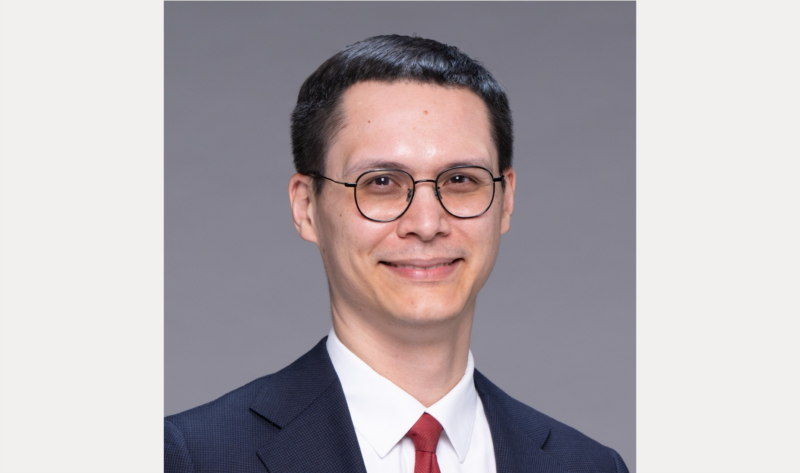
The two very distinguished speakers were Ms Mazmin Mat Akhir, who has been the Chief Librarian of the Tuanku Syed Faizuddin Putra Library at Universiti Malaysi Perlis since 2014 and Chris Chan, who is University Librarian at Hong Kong Baptist University (HKBU).
You are currently viewing a placeholder content from YouTube. To access the actual content, click the button below. Please note that doing so will share data with third-party providers.
Mazmin Mat Akhir
Mazmin spoke first. She talked of how the librarians of the 20 public universities and 4 government-linked universities in Malaysia work together to negotiate consortium deals. This is an intricate process – Mazmin said that it could take years to finalise a deal. Since 2019, the KONSEPt Consortium has gained significant assistance from the Ministry of Higher Education in Malaysia, but this increases complexity by making yet more decision-makers involved. The overarching goal of all is the same, however: to secure the most relevant content and the best value for money for all the Malaysian Higher Education Institutions involved.

In 2019, KONSEPt declared its willingness to work with Read and Publish models. It was therefore prepared to consider publishers’ Transformative Agreements (TAs). The first TA was signed in 2025 and the consortium is now looking at others. In order to reach the stage at which it is happy to sign a contract, it must work out how to collect and implement multiple payments from all the parties concerned. This means not only working closely with the publishers but also gaining commitment from key stakeholders. KONSEPt has worked hard at building relationships and the Council of Public Universities’ Chief Librarians and members of the Electronic Resources Consortium (MOLEC) have now developed strong trust in the consortium.
Last year, we interviewed Mazmin for our “Librarians Investing Ahead” series – learn more about her work at the Universiti Malaysia Perlis here!
Mazmin went on to describe the “bigger picture” of Open Access implementation both regionally and internationally and described how librarians must try to reconcile the often conflicting challenges of funding, academic need for tenure and prestige, and – sometimes – publishers’ intransigence or failure to recognize that different countries across the world experience different priorities and constraints.
Chris Chan
Chris spoke about OA from his perspective as University Librarian of one of Hong Kong’s eight public universities. He said that the Research Council of Hong Kong “encourages” Open Access but does not mandate it. Some mandates exist at the institutional level; however, “enforcement is patchy”.
The core challenge is to secure faculty compliance. The Green OA model is strong in Hong Kong; however, as there is no absolute requirement to post in the institutional repositories, compliance is incomplete. Leadership from the top is necessary to gain complete implementation. Even then, there are issues to address: for example, version control: it is not helpful to an academic’s career if the pre-print article is quoted, rather than the version of record.
Hong Kong’s public university libraries belong to the JULAC Consortium, which to date has negotiated 18 TA deals. Chris emphasized that not every institution contributes to or benefits from every deal: participation is necessarily selective, to reflect the needs of the individual institution. However, it can be demonstrated that the consortial deals show considerable savings – “cost avoidance” – as the number of articles they enable authors to publish would cost significantly more if article processing charges (APCs) were being paid for each article.
Despite this, Chris is not overly optimistic about the future of OA in Hong Kong. He said that although the eight universities are “in a relatively good place” financially, one of the paradoxes of TAs is that both read and publish costs continue to rise as subscription content expands. Faculty are also confused by some publishers’ “rules” – e.g., it is hard to understand why certain Gold OA journals are not eligible to be included in the deal. The administrative burden is high; and – his favourite complaint – the token system of restricting the number of articles that can be published causes many difficulties. He said that he very much favours the Subscribe to Open (S2O) model, but many publishers do not offer it.
Did you know that De Gruyter Brill has its own Subscribe to Open model, DG2O? Find out more in this blog post!
In conclusion, Chris touched briefly on the problems of publishing books OA and the merits and drawbacks of Diamond Open Access; and he asked the question, instead of funding TAs, what if libraries used their funds to build OA platforms?
Roundup
There followed a lively and informative Q & A session. Asked about OA for books – which both speakers had touched on – both agreed that although in principle books should be made available OA, in practice the huge financial outlay is hard to justify because it does not give the institution sufficient returns: the cost of publishing one book OA would cover publication of several journals articles, and the impact and therefore contribution to academic careers of the latter is greater. However, Mazmin mentioned that Unimap is about to experiment with OA textbooks.
Both speakers said they found some publishers very helpful indeed, though others have been less helpful, even obstructive. They felt that this stems from the fact that certain publishers fail to take into account the specific national and individual needs of Asian libraries and their patrons – and therefore are, indeed, taking a “cookie-cutter” approach.
On behalf of De Gruyter Brill, huge thanks again to Mazmin Mat Akhir and Chris Chan for their very informative presentations and amazing insights.
To catch up with the full webinar, please find the video recording here.
You might also be interested in this blog series

[Title Image by Andrew Kliatskyi via Unsplash]