(In)accessibility in Higher Education and the Myth of the Ideal Academic
What makes the academy still particularly inaccessible, and what can we do about it? By centering the experiences of disabled academics, a new edited collection points the way towards practical inclusivity and allyship.
The romanticized image of the ideal academic can create a myriad of problems. From aesthetic blogs to study-with-mes that encourage eight-hour study sessions, we risk teaching students that value lies in the outward performance of academia rather than the work itself.
Above us all looms the pressure of becoming The Ideal Academic. One who relentlessly pursues productivity above all else. This ideal is a myth that is harmful to all, deterring future students and ensuring that all academics will eventually fail. Indeed, we cannot but fail if the measure of success is productivity of mythological proportions. After all, the academic parable teaches us that no matter how good one is, one has always fallen short.
The same parable teaches us that the Ideal Academic must place academic output above everything else. To take consistent steps towards academic success, regardless of any personal cost and without stopping to acknowledge what has been meaningfully achieved. In this scholastic mythos, Icarus is instead to be patted on the molten remains of his waxen wings with a condescending “But do you think you tried hard enough? Best to fly closer next time.”
“We cannot but fail if the measure of success is productivity of mythological proportions.”
This Ideal Academic not only hurts non-disabled academics by demanding unrealistic workloads, but it greatly disadvantages those that are disabled. The minimum requirements a ‘real’ academic needs to meet are often characterized as tasks that require a non-disabled body. For example, hours of late-night study, traveling great distances to attend as many conferences as physically possible, publishing great quantities regularly. These are not only standards that are unattainable, but they actively exclude those that are disabled, people who are unable to entertain even the notion of such fabled standards.
The belief that one can be a healthy academic and meet these impossible standards is in itself ludicrous, but using it as a yardstick against which to measure academic success risks discrimination against those who are unable to participate in this performance. Many of us may like to think that we will one day be The Ideal Academic and so do not challenge this myth strongly enough. Failing to do so not only perpetuates this myth but risks supporting discriminatory values.
When approaching how we might make the academy more accessible, we can forget that academics themselves are the first line of attack. We can begin to look inwards as to what attitudes we bring to our academic colleagues. It is vital that we say no to this one-size-fits-all approach to academia, but instead welcome and defend alternative approaches as equally valid ways to enact academic work.
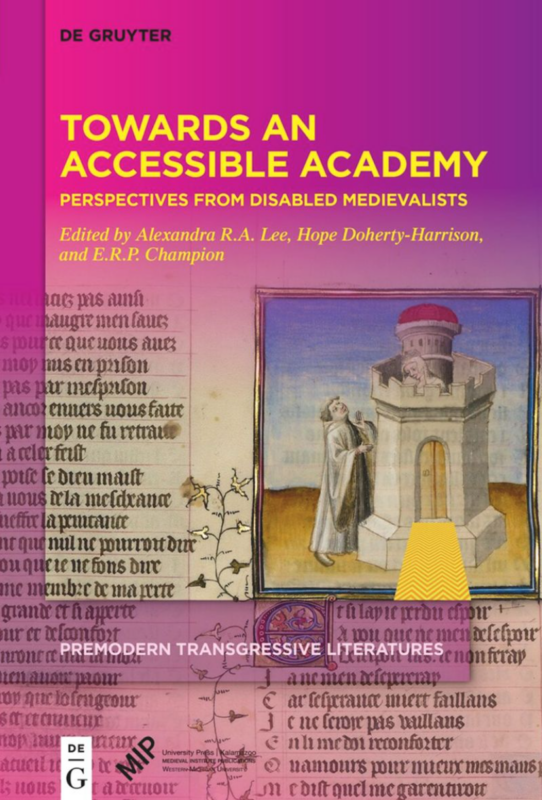
We can begin with small, achievable steps, some that we can even implement straight away. Many of these are outlined in our book, Towards an Accessible Academy, through the appendices ‘Making Conferences More Accessible’ and ‘Top Ten Action Points.’ One of the clearest action points that arose from these sections was flexibility.
During this process, we as editors looked inward. Throughout the writing of our book, I have been very fortunate to be supported by my two wonderful co-editors Alex R. A. Lee and Hope Doherty-Harrison who share this point of view about the importance of flexibility. From the outset, we agreed that it was vital that we represented the values we have outlined in our book.
“Accessibility is not a gift we award to the deserving few, and so anyone that needed flexibility received it.”
In order to support disabled academics, we needed to factor in more flexibility to make traditional publishing methods accessible for all of our contributors. We began by collating all relevant deadlines from the publisher and set earlier submission deadlines for the editors. Then, we set even earlier deadlines than these for chapter authors whilst ensuring there was enough time to write. This planning allowed us to agree to any flexibility requested with these dates. Not only did the scheduling of earlier deadlines mean that we could agree to later submission deadlines where required, but by extension we as editors benefitted from this flexibility – we were able to apply this flexibility to our own work and ensured each contributor was able to submit the work they were most happy with by taking a little more time where needed.
To make this work, the editors agreed that it was important not to question contributors over their reasons for needing flexibility. Having experienced this barrage of personal questions myself, I know that it can prevent academics from requesting this accessible change and even affect the quality of work I submit. As we discuss in this volume, accessibility is not a gift we award to the deserving few, and so anyone that needed flexibility received it. We agreed that this change of approach was important, but it did require an agreement from all editors to be similarly flexible and willing to adjust our workflow whenever a contributor needed.
This did have some challenges, but these were mitigated greatly by our planning ahead. Due to advanced scheduling, this flexibility was not reactionary and therefore implemented successfully whenever the need arose. Eventually, we were grateful to our past selves for advocating for this approach as deadlines changed often in response to the accessibility requirements of all contributors.
“With realism, honesty, and acceptance, we can begin to counteract the harmful actions of the Ideal Academic and acknowledge the ableism inherent in this myth.”
Understanding the reality that we could not anticipate every single need meant that we embraced flexibility from the outset, which ensured our system was wonderfully malleable to welcome any new needs. I believe this is a fantastic example of how flexibility needs to be a proactive step, as opposed to a reactionary one. Our book acknowledges that there cannot be one bespoke system that fits every need, and so flexibility is vital when it comes to making the academy more accessible.
Using our commitment to flexibility, we must actively challenge the Ideal Academic which perpetuates the disconnect between words and deeds. By focusing on appearance over impact, this myth strives to undermine meaningful action that the academy so desperately needs. With realism, honesty, and acceptance, we can begin to counteract the harmful actions of the Ideal Academic and acknowledge the ableism inherent in this myth.
We can acknowledge that it is ableist to demand that value is determined by an outward performance of academia: in-person conference attendance, a consistent and predictable academic output, and long unbroken hours of study. And most importantly, we must acknowledge that, rather than making us less academically valuable, supporting realistic and diverse values and methods as we work towards the same high quality of academic work makes our academy more accessible.
Learn more in this related title from De Gruyter Brill
[Title Image by DrAfter123/DigitalVision Vectors/Getty Images]