“I would like to encourage women to simply let things go wrong”: An Interview with Kristina Priller
When society tell us we can ‘have it all’, a huge part of the division of labor is made invisible – the quiet and persistent overload that structures many women’s lives in the domestic sphere.
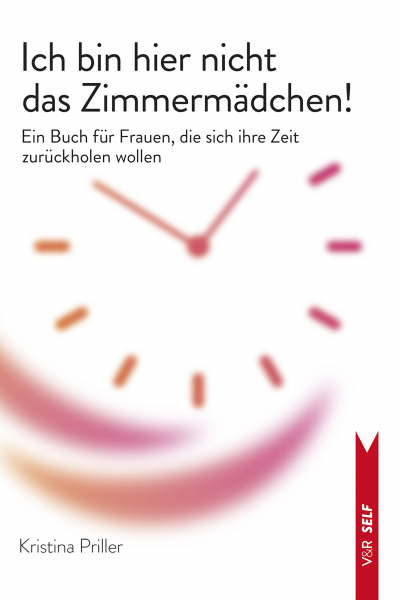
In her book Ich bin hier nicht das Zimmermädchen! (I’m Not the Maid Here!) Kristina Priller turns her attention to a reality that is both underexamined and immediately familiar. For all the language of progress, expanded opportunities and discursive visibility, the expectations placed on women have not diminished; instead, many are now forced to juggle their personal and professional fulfillment with unseen and unpaid labor at home.
Marking this year’s Women’s History Month, the interview below takes these tensions and expectations seriously, reminding us how they are lived, negotiated and often deeply internalized. Priller writes carefully and reflectively from this vantage point in her new book, asking why this burden remains so rigidly in place for many women, why repeated attempts to negotiate or to set boundaries tend to settle along familiar, patriarchal lines.
Kristina Priller has been working as a freelance communications consultant and copywriter for many years. After a cancer diagnosis, she decided to reclaim her time and started prioritizing the things that matter to her. She began documenting her personal development journey on her Instagram channel, @thehappyworklife, where she inspires women to take ownership of their time.
In this conversation with De Gruyter Brill’s Alexandra Hinz, Priller speaks lucidly about how her own experiences informed the writing of her new book. She offers both personal insight and practical advice for dealing with unequal expectations and the persistent judgment around women’s choices, challenging embedded assumptions about the burdens of care and work, and who is expected to carry them.
Alexandra Hinz: In your view, what are the biggest challenges women face today?
“In our daily lives, we fill so many different roles that we no longer know exactly who we are.”
Kristina Priller: That we are supposed to be everything and do everything all at once. The perfect mother, raising her children by the book, with a perfect career and a home that is always presentable, like something out of a catalog. Someone with a fulfilling private life, who exercises regularly and cooks fresh meals every day – and is, of course, interested in many things and socially engaged.
Living all of this is impossible, and yet we try anyway, because we have been taught that you can ‘have it all.’ In our daily lives, we fill so many different roles that we no longer know exactly who we are.
AH: Despite all the social changes we’ve seen, why has so little changed when it comes to the chronic overload that many women experience? Which area do you feel has seen the least improvement?
KP: I believe that many new opportunities have opened up for women in recent decades – which is not to say that we have already ‘arrived’ in terms of equality; there is still plenty of room for improvement. But across all the areas that have newly opened up for women, the demands have remained the same. We live in a permanent state of this – and that too: we are expected to work as if we had no children, and raise our children as if we had no job.
I think a lot has changed, but the pressure has not decreased. If anything, it has increased. What personally annoys me the most is that women still have to justify what they want to do with their (life)time. Children, no children, career, staying at home, traveling, not traveling. No matter what you do, it will still be judged.
AH: In your book, you describe your cancer diagnosis as the turning point that led you to think deeply about reclaiming time. What has changed in your everyday life since then?
KP: This was a life-changing experience, and the feeling that I’m running out of time, that maybe there is no ‘later’ for me, is still very present today. After the diagnosis, I left my ‘good girl’ era completely behind and started to make room in my daily life for the things that are important to me. I no longer work towards later; I want my life to be good today.
“I no longer work towards later; I want my life to be good today.”
So, in order to have time for my books, to make music, to walk through the forest and to fill my Instagram profile @thehappyworklife with content, I now say no to a lot of other things. At first, this caught some people by surprise, but I think everyone has gotten used to it by now.
AH: I’m Not the Maid Here! (Ich bin hier nicht das Zimmermädchen!) is a clear statement. What holds women back from maintaining this boundary?
KP: When I look at my Instagram inbox, the prevailing sentiment seems to be: If I don’t do it, no one else will, and we’ll sink into absolute chaos. I would like to encourage women to simply let things happen and go wrong. When words aren’t followed by consequences — because we always play the last-minute firefighter and ‘rescue’ the family from chaos — then nothing usually changes.
‘If I leave it long enough, she’ll get so annoyed that she’ll end up doing it’ – you need to take away this certainty from those around you. I know it’s hard. But living in a family is not the same as living in a family hotel.
AH: For women who don’t currently have time to read your book, who are feeling acutely overwhelmed: what are three pieces of advice you would give them right now?
KP: First things first, bystanders must be turned into stakeholders — call a family meeting, explain that things are going to change, as of today, and assign age-appropriate tasks. It’s best to write these agreements down and turn them into a family chore chart with checkboxes.
Shared routines work very well when all family members are pitch in and working side-by-side. We call this our “household reset” – after dinner, we all tidy up and clean together for 15 or 20 minutes and reset our home to its ‘factory settings.’
Last but not least, do sit down with your partner and define your schedules for the week ahead. (Not later, when things might calm down! They never will …) This means you are completely free to do whatever you want.
Learn more in this related title from V&R / De Gruyter Brill
[Title image by Yuliia Kaveshnikova/iStock/Getty Images Plus]