Equality, Empathy, and Envy: Inside the “Liberal Brain”
Social neuroscience explains why the Democrats are making a comeback in the mid-term elections.
No jokes about politicians and brains, please. This is serious. And, yes, neuroscience is relevant. But let’s start with the basics.
The 2026 U.S. midterms suggest that candidates on the liberal side of politics could do very well—perhaps even win big. A September Economist/YouGov poll gave Democrats a 14-point lead among likely voters. After years of emphasizing fiscal prudence, Democrats are once again appealing to traditional left-wing themes: equality, fairness, and, perish the thought, taxing the ultra-rich.
Working-class Americans may be returning to the Left. Social neuroscience offers some clues as to why. It has to do with what researchers sometimes call the “liberal brain.” Functional magnetic resonance imaging (fMRI) cannot read political convictions directly, but by showing how people’s brains respond to particular stimuli, it can help us understand what makes voters tick.
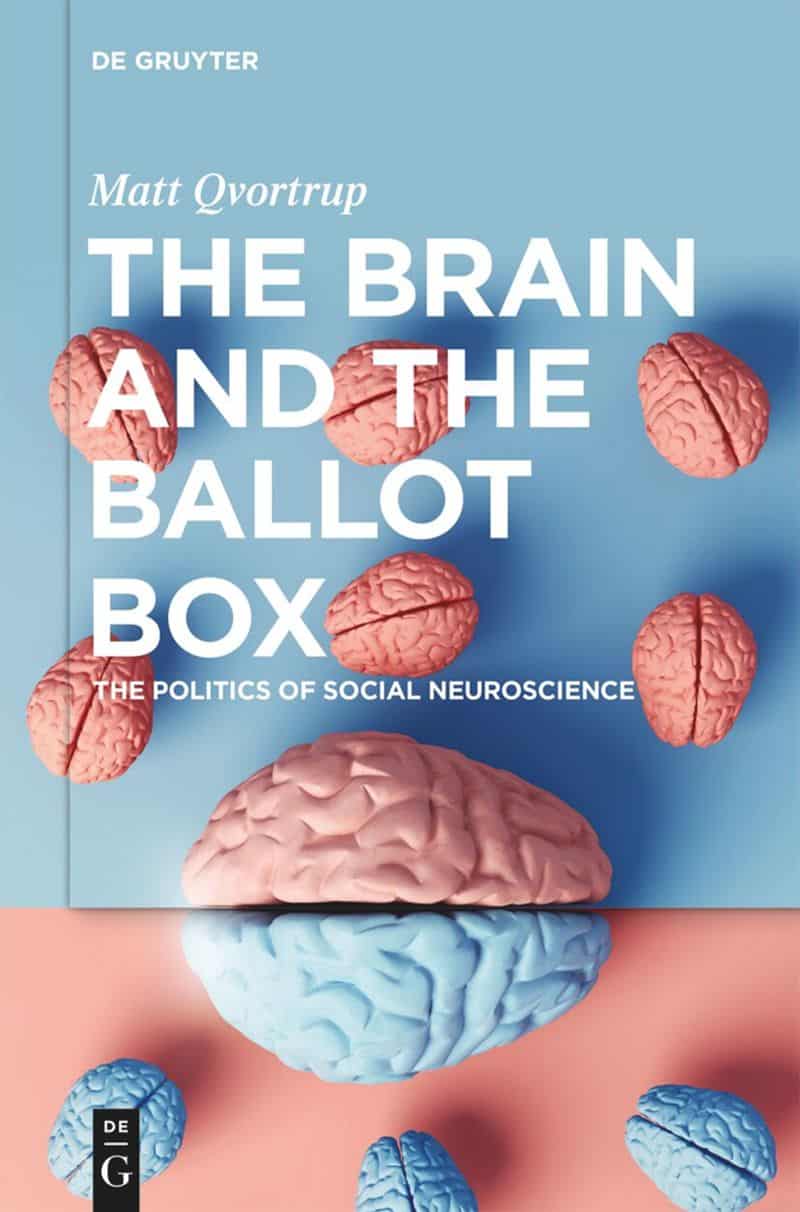
This is the story of three Es: equality, empathy, and envy—with a little argumentative fact-checking thrown in. My argument is not based on opinion polls or psychometric tests of the kind used in senior management recruitment. Instead, in my new book, The Brain and the Ballot Box, I draw on studies that have scanned the brains of people with different political orientations.
Equality
When people confront an unfair distribution of wealth, studies suggest that those on the Left can show activity in the anterior cingulate cortex, a brain region involved in processing conflict, perceived unfairness, and social exclusion. Why does this matter? Because equality is the first of our three Es.
Of course, neuroscience is complicated. Brain regions interact, and no single part of the brain contains a political ideology. Nevertheless, research suggests that people with different political orientations can respond differently to perceived unfairness.
“Parties risk losing sight of their own voters when they become so concerned with appearing economically respectable that they neglect fairness.”
The political implications are intriguing. Under the New Democrats of the 1990s, appeals to redistribution were often toned down as the party sought economic credibility. Across the democratic Left, politicians have faced pressure to demonstrate fiscal responsibility. There is nothing wrong with prudent public finances. But parties risk losing sight of their own voters when they become so concerned with appearing economically respectable that they neglect fairness.
For many working-class voters, equality matters. When established parties fail to address their concerns, some voters disengage; others are attracted to populist messages promising to challenge a supposedly self-serving elite. Now the Left may be finding its way back. Neuroscience helps explain why appeals to fairness remain politically powerful.
Empathy
Emotional appeals centered on other people’s suffering can also resonate with liberal voters. Here, too, neuroscience offers intriguing evidence. Research on political donations finds differences in brain activity associated with the political orientation of the parties receiving donations, including activity in the insular cortex, a region implicated in emotional processing and empathy.
Donating to a party that champions equality is not the same as demonstrating empathy. However, other studies have found differences in brain activity when people with different political orientations watch videos of people in distress. One study involving 82 American participants found greater activity in the left insula among Democrats, while Republican participants showed greater activity in the amygdala, a region involved in processing emotionally significant stimuli, including fear and threat.
“Empathy may be politically consequential.”
These findings do not establish that one political group is inherently more compassionate. They do, however, raise an interesting possibility: people with different political outlooks may respond differently to emotional appeals.
Politics is not simply a contest over tax rates and economic growth. It is also about whether people believe that the suffering of their fellow citizens deserves a response. Empathy, in other words, may be politically consequential.
Envy
Readers on the liberal side might now feel rather pleased with themselves. Equality and empathy are socially desirable attributes, but feeling good about yourself will not necessarily win elections. This echoes a joke by the American satirist Tom Lehrer, himself a man of the Left, who said that the Right might win the battles while the Left had all the good songs.
The third E is less comfortable: envy. Envy is the dissatisfaction we feel when comparing our circumstances with someone else’s possessions, success, or good fortune. It is the sense that others have something we do not—and that the difference matters.
Neuroscientists have investigated how people respond when others enjoy rewards or advantages that they themselves lack. Such situations can engage parts of the brain’s reward-processing system, including the ventral striatum. Dopamine, a chemical messenger central to this system, is involved in motivation, learning, and reward processing, although its relationship with envy is more complicated than a simple rise or fall in dopamine levels. Social comparisons can nevertheless affect how we experience rewards and disappointments.
“The question is how politicians mobilize envy—and against whom.”
The political relevance is clear. People rarely assess their economic circumstances in isolation. They compare their lives with those of neighbors, employers, and the wealthy. Resentment can be directed at billionaires, financial institutions, and economic elites. It can also be channeled towards immigrants or other groups portrayed as undeserving beneficiaries. Envy is not the exclusive property of the Left or the Right. The question is how politicians mobilize it—and against whom.
Bringing the Three E’s Together
If Democrats want to capitalize on their current polling advantage, they need to address voters’ perceptions of fairness: why some prosper while others struggle to make ends meet. They must make a convincing case for empathy and acknowledge the resentment generated by perceived inequality.
“The Left’s challenge is to offer a constructive explanation of inequality without adopting a politics of exclusion.”
Politicians on the far right have often proved effective at directing anger towards an allegedly self-serving elite while also blaming outsiders for ordinary people’s difficulties. The Left’s challenge is to offer a constructive explanation of inequality without adopting a politics of exclusion.
The renewed emphasis on affordability, economic fairness, and taxing the rich—themes associated with progressive figures such as Zohran Mamdani—suggests that Democrats are rediscovering this language. Whether it brings electoral success remains to be seen.
Neuroscience cannot predict election results, and a brain scan cannot tell us how someone will vote. It can, however, help explain the emotional and cognitive processes that shape political behavior. Winning elections is not rocket science, yet brain science can be surprisingly useful in understanding what motivates voters.
Learn more in this related title from De Gruyter Brill
[Title image by Erick Butler via Unsplash]