10 Tips for Goal-Oriented Science Communication
Building a bridge between science and society takes more than passion – it takes strategy. These 10 practical tips will help you take your first confident steps in science communication.
Science communication has never been more important, or more complicated.
Researchers today can choose from a dizzying selection of channels and formats: social media, podcasts, videos, public lectures, citizen science projects, newsletters, science festivals, policy briefs and media interviews. Just to name a few. At the same time, there are many different expectations in the worlds of research, education and publishing about what science communication should achieve. In this environment, the challenge is choosing the right ways to communicate, rather than trying to tick every box.
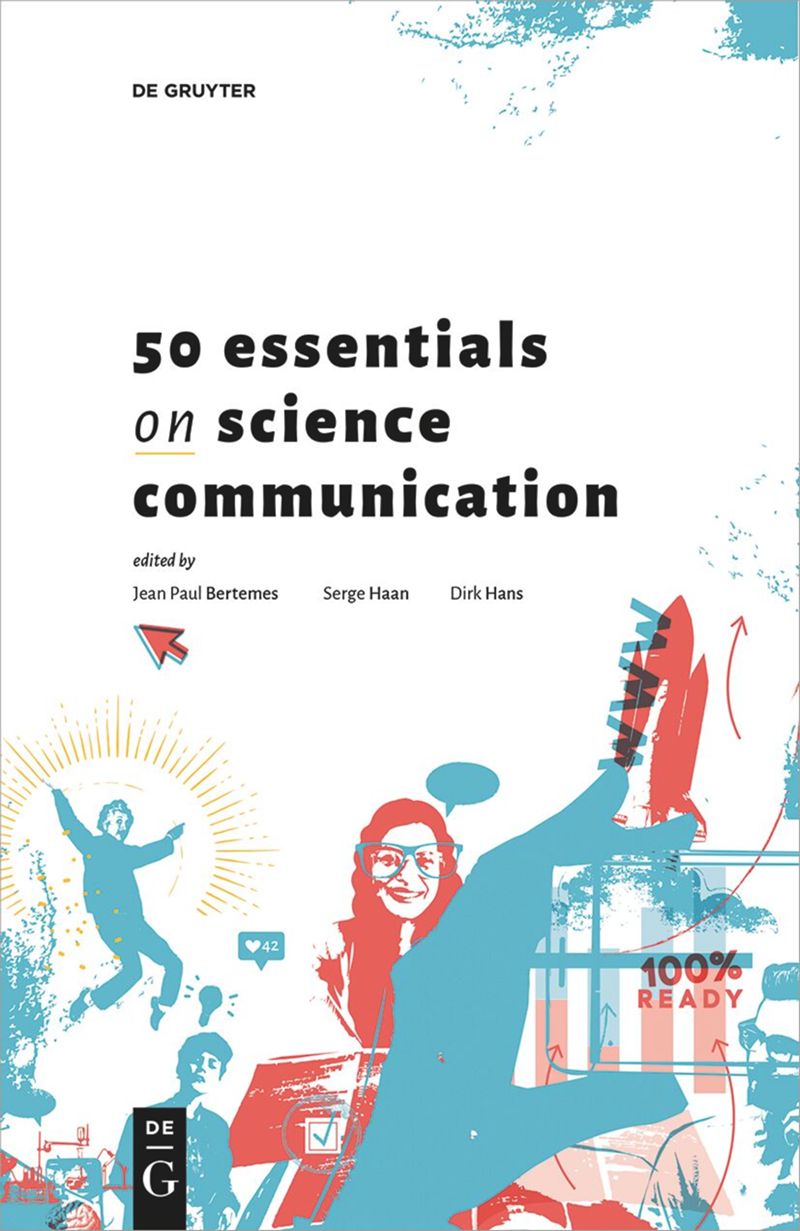
That is one of the central messages of 50 Essentials on Science Communication. Rather than treating science communication as one of many skills in a researcher’s toolkit, the book presents it as a strategic field that requires clear goals, thoughtful audience engagement, and an understanding of the relationship between science and society. As noted by the editors – Jean-Paul Bertemes, Serge Haan and Dirk Hans – successful communication is often as much about deciding what not to do as it is about deciding what to do.
Drawing on the book’s opening sections, here are ten practical tips for more successful science communication.
1. Start with your goal, not your channel
Before launching into the public sphere, ask yourself a simple question: What am I trying to achieve?
Do you want to inform? Build trust? Encourage dialogue? Influence policy? Attract students and research collaborators? The answer should then shape every subsequent decision, because a clear objective is the foundation of effective science communication.
2. Remember that communication is more than dissemination
For many years, science communication was largely understood as the transfer of knowledge from experts to the public. Today, the field increasingly recognizes that communication can be strengthened through dialogue and participation. Sometimes the goal is to explain, sometimes to listen, and sometimes it is to work with communities to solve problems together.
3. Build trust by explaining how science works
When communicating research, it is tempting to focus on exciting findings and breakthrough results. But the editors argue that one of the most valuable contributions science communicators can make is helping people understand the scientific process itself.
How are findings tested? Why do scientists disagree? What role does peer review play? Why do conclusions change as evidence accumulates?
Trust is built not only through results, but through transparency about how knowledge is generated.
4. Don’t be afraid to communicate uncertainty
Researchers sometimes worry that acknowledging uncertainty will undermine public confidence.
In reality, uncertainty is a normal and essential part of science. Scientific knowledge develops through questioning, testing, debate, and revision. Communicating uncertainty honestly can help audiences understand why scientific advice evolves over time.
People do not necessarily lose trust when scientists admit what they do not know. They often lose trust when uncertainty is hidden or ignored.
5. Know who your stakeholders are
Science does not exist in isolation.
Researchers and institutions interact with a wide range of stakeholders: citizens, policymakers, businesses, NGOs, community groups, funders, journalists, educators, and many others. Each has different interests, expectations, and concerns.
Goal-oriented communication begins with understanding who these stakeholders are and what kind of relationship you want to build with them.
Just as importantly, communication should not be treated as a one-way process. Science must be prepared to listen as well as speak.
6. Define a real audience—not “the general public”
One of the book’s most practical pieces of advice is also one of the simplest.
If your target audience is “the general public,” your audience is probably too broad.
Different groups bring different experiences, motivations, knowledge levels, and attitudes towards science. Communication that works for prospective students may not work for policymakers. What engages families may not engage industry partners.
The more clearly you define your audience, the more effective your communication is likely to be.
7. Build on what people already know
Good science communication does not start from zero.
People bring prior knowledge, experiences, values, and interests to every interaction with science. Rather than simplifying content to the lowest common denominator, communicators should look for ways to connect new information to existing understanding.
When audiences can relate scientific ideas to their own experiences, communication becomes more meaningful and memorable.
8. Be authentic
Authenticity is one of the strongest drivers of engagement and trust.
People often respond not only to scientific facts but also to the enthusiasm, curiosity, and commitment of the people behind them. Researchers communicating their own work have a unique advantage: they can speak from direct experience.
That does not mean abandoning professionalism. It means allowing audiences to see the real people, questions, challenges, and motivations behind the research.
Authenticity is often more persuasive than polish.
9. Ask for help
Researchers are experts in their disciplines. That does not automatically make them experts in communication.
The book highlights a challenge familiar across academia: many researchers receive little formal training in communicating with non-specialist audiences. At the same time, communication has become increasingly important for public engagement, funding applications, partnerships, and institutional visibility.
Fortunately, most researchers do not have to do it alone. Communications professionals, press officers, outreach specialists, and experienced science communicators can provide valuable guidance and support.
The best science communication is often collaborative.
10. Be strategic about where you invest your time
Researchers face constant demands on their attention. Time spent on communication is time not spent on research, teaching, administration, or mentoring.
For that reason, the editors repeatedly emphasise the importance of prioritisation. Not every activity is worth pursuing. Not every platform deserves your attention. Not every opportunity will advance your goals.
Effective science communication is not about being everywhere. It is about choosing the activities that have the greatest impact for the audiences that matter most.
In a world overflowing with communication opportunities, strategic focus may be the most important communication skill of all.
________________________________________
Science communication is often described as a bridge between science and society. 50 Essentials on Science Communication reminds us that building that bridge requires more than enthusiasm. It requires clarity of purpose, an understanding of audiences, a willingness to listen, and a commitment to trust and transparency.
For researchers, librarians, publishers, and science communicators alike, those principles offer a useful starting point for communicating with greater confidence—and greater impact.
Learn more in this related Open Access title from De Gruyter Brill
[Title image by imaginima/iStock/Getty Images Plus]